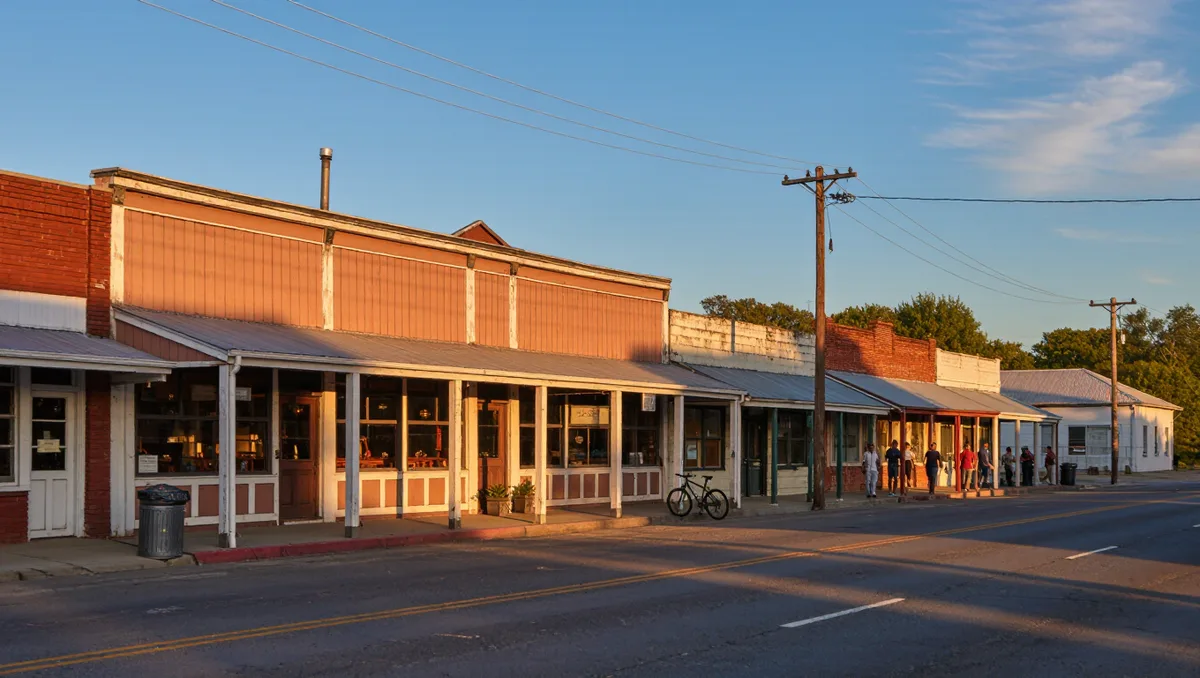
A third place is a social space that is neither home nor work: the cafe, the barbershop, the bowling alley, the diner. Sociologist Ray Oldenburg named the idea in his 1989 book The Great Good Place, and he gave it a serious job. Third places, he argued, are the rooms where community actually happens.
The vanish act is the part people now argue about. Robert Putnam’s 2000 book Bowling Alone charted a long slide in club rolls and league nights across postwar America. The slide did not stop. Screens improved, suburbs spread, and the walk from the parking lot got longer. Readers following this should also see Who Actually Goes to Museums in America.
Where Did the Idea of the Third Place Come From?
Oldenburg built the term from plain observation. The first place is the home. The second is the workplace. The third is everything in between: the saloon, the church basement, the card table, the porch. His book The Great Good Place made the case in 1989, amid a national worry about civic decay.
The room itself is old. Ancient Athens had its agora, part market and part debate hall, where philosophers mixed with common folk. Chinese teahouses ran on the same fuel; tea had become a social drink by the Jin dynasty, between 265 and 316 AD. Seventeenth century England turned the coffeehouse into what regulars called a penny university, a school that cost a copper. Oldenburg co-wrote a UNESCO essay with a claim for any century: coffeehouses “can be seen as the precursors of democracy.”
What Turns a Cafe Into a Real Third Place?
Oldenburg and his coauthor Karen Christensen list the traits, and none costs money. A third place is open, so nobody needs an invitation or an appointment. It is unpretentious, so a work jacket never looks out of place. It sits close enough to visit on an ordinary Tuesday.
- Regulars set the tone, and a host greets arrivals as a matter of habit.
- Conversation is the main event. Talk outranks the menu.
- Laughter is frequent, and the mood stays playful.
- The price of entry stays low. Fancy rooms scare off the mix.
That mix is the point. A bar with a velvet rope is a poor third place; so is one where nobody knows a face. The format works because it flattens status at the door, which is what most of daily life refuses to do.
Why Did Third Places Start to Vanish?
They did not collapse in one season; they thinned across decades. Putnam’s Bowling Alone put numbers on the drift in 2000, using General Social Survey data. League bowling shrank even as more people bowled. Club rolls fell.
Putnam split the blame with unusual care. He tied a quarter of the post-1965 fall-off in civic engagement to electronic entertainment, led by television. Another tenth went to suburbanization and sprawl, and half went to generational change. His core phrase was sharper than any statistic: technology was “individualizing” leisure time. Oldenburg added a retail warning. A corporate chain, he wrote, is a “less hardy” third place than the shop owned down the street, because the money leaves with the franchise.
Did Screens Replace the Third Place or Copy It?
The internet complicates the eulogy. Researchers who study online communities find Oldenburg’s traits there: easy entry, familiar regulars, conversation as the main event. Multiplayer game worlds go further, since players meet as avatars, which strips away the status markers a person wears to a bar. During COVID-19 quarantine, writers described a hybrid “quarantined fourth place” holding social ground while real rooms stayed shut.
The case for the other side is honest: a lobby a person can mute is not a counter that remembers an order. Presence is not membership. Christensen, who updates Oldenburg’s book, treats this as the open question. Her 2023 edition argues that third places are part of the answer to loneliness and political polarization, which is a claim about rooms, not routers. This connects to our earlier piece, The Book Club Industrial Complex.
Conclusion: A Third Place Is a Habit Before It Is a Room
The lesson from the agora to the coffeehouse is that the furniture never did the work. Third places die when people stop dropping in, and they revive the same way. Oldenburg’s term survives because it names a simple transaction: show up often enough to become a regular, and a neighborhood gains a civic organ no app has managed to replace. Count the rooms where a stranger becomes a familiar face for free. Then count again after the next lease change.