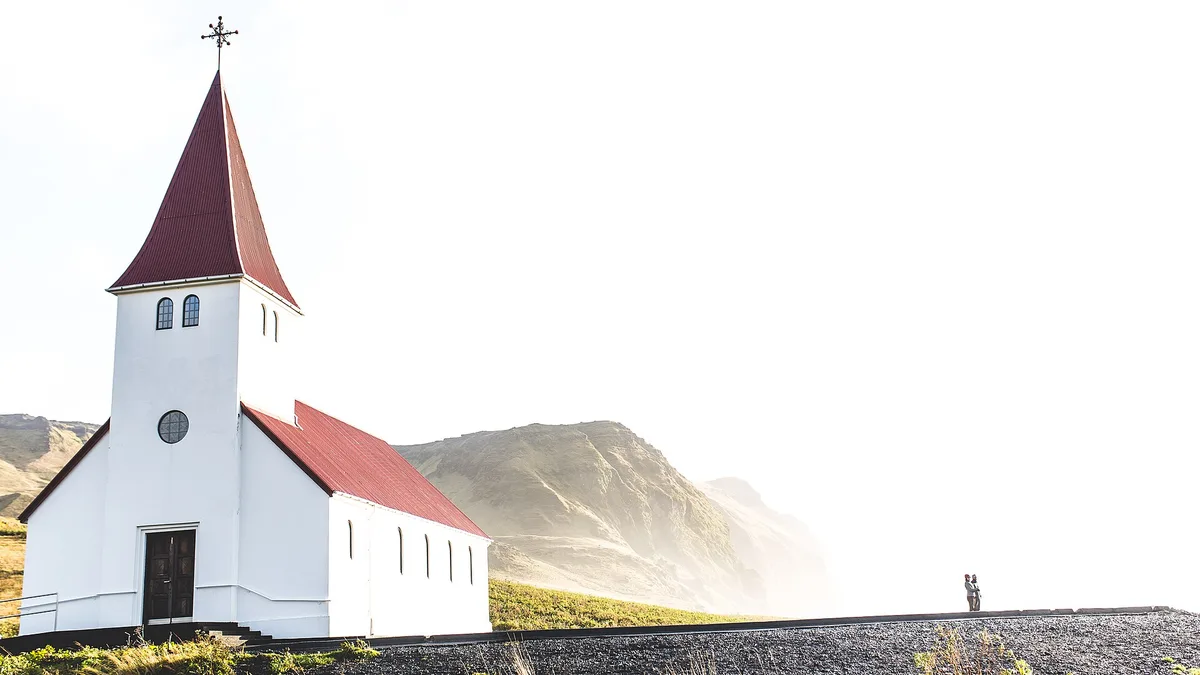
Americans do not simply inherit a congregation. They pick one, they leave one, and many pick again. In much of the world, faith follows family and borders. In the United States, it has always worked more like a market. Churches welcome families, and families weigh their options.
That freedom was built into the design of the country. The First Amendment guarantees the free exercise of religion. It also prevents the government from establishing a state religion. With no official church to join, Americans learned to choose.
Built by Choosing
Choice shaped the country from the start. The Massachusetts Bay Colony was established by English Puritans. Pennsylvania was founded by British Quakers, Maryland by English Catholics, and Virginia by English Anglicans. Settlers came in search of religious freedom. They built communities of like-minded people.
Revival came next. The first and second Great Awakenings led to enormous growth in Christian congregations. Only 10 percent of Americans were members before the Awakenings. Eighty percent belonged after. The country was becoming a nation of joiners. Freedom made faith a choice. Choice made faith a kind of market. That strange engine has been running ever since.
An Open Market of Faiths
The market kept producing new options. New denominations were formed, such as Adventism, the Latter Day Saint movement, and Pentecostalism. A vast number of Catholic and Jewish immigrants arrived in the 19th and 20th centuries. Religious involvement grew as well. It rose from 17 percent of the population in 1776 to 62 percent in 2000. A country with that many choices almost guarantees movement between them. Each new church gave families one more door to try. For related coverage, see Why So Many American Towns Lost Their Movie Theaters — and What Fills the Space Now.
Switching Becomes Normal
The switching now shows up plainly in the numbers. A 2022 study by Pew Research Center estimated that the religiously unaffiliated had reached 30 percent of the population by 2020. In the "most plausible" scenario, that share would increase to 42 percent by 2050. The study accounted for a quick rise in religious switching.
The movement runs through families too. Among Americans who identify as unaffiliated, 41 percent were raised Protestant. Another 28 percent were raised Catholic. A 2023 PRRI survey found that 51 percent of unaffiliated Americans were formerly Protestant. Another 35 percent were formerly Catholic. Leaving one fold for another, or for none, is now a normal part of religious life.
How People Actually Choose
So what draws a person through a particular door? Rarely doctrine alone. People tend to choose a congregation the way they choose a neighborhood. They look at the welcome, the music, and the teaching. They notice whether their children find friends. Convenience matters, and so does a preacher's style. Size matters too. Some people want a big congregation with many programs. Others want a small one where everyone knows their name. Americans may be becoming more "spiritual" and less "religious". That makes the choice feel personal rather than inherited.
Conclusion: A Country That Keeps Choosing
Congregations in America rise and fall on choice, not on law. The same freedom that let Puritans build Massachusetts lets a family visit three churches in a month and join none of them. Switching looks less like a crisis of faith than a national habit. It is a habit two centuries in the making. The pews may shift, but the right to move between them is one of the oldest American freedoms there is. The door stays open, and people keep walking through it. This connects to our earlier piece, Who Actually Goes to Museums in America.