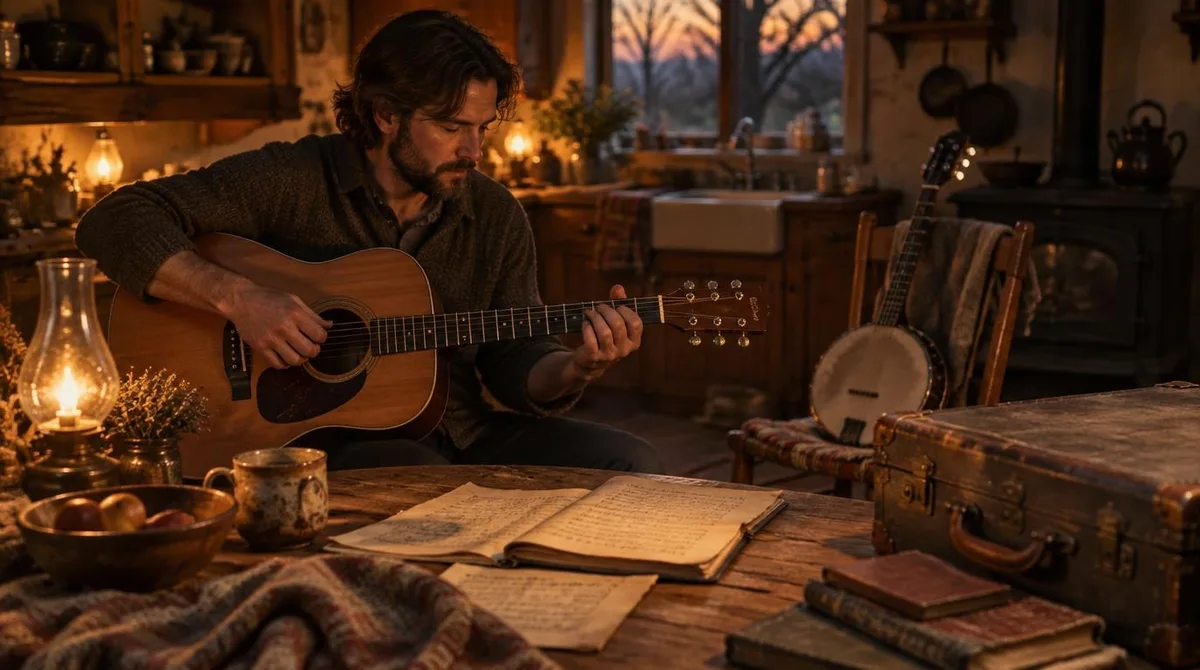
Folk music artists shaped the American sound by carrying songs that had no named composer and then rewriting them for their own moment. The music started as something a community passed along by memory. A handful of singers turned it into a national art form, and their choices still echo in what plays on the radio today.
According to Wikipedia, folk music covers both the old traditional songs and the newer style that grew out of them during the twentieth-century folk revival, which peaked in the 1960s. That split matters here. The first kind of artist collected and preserved. The second kind borrowed the old material and made something new with it. Both groups changed how Americans hear themselves.
What makes an artist "folk" in the first place?
The word itself is younger than the music. Wikipedia notes that "folklore" was coined in 1846 by the English antiquarian William Thoms, and the idea of folk music grew out of that term. The core definition is simple: songs passed on by ear, with unknown writers, changing a little each time someone sings them.
That process is the heart of the genre. A song travels from a parent to a child, or from a worker to a coworker, and each singer adjusts it. The community reshapes the music as it goes. Wikipedia describes this as the "fashioning and re-fashioning" of songs by the people who sing them. So the first folk artists were not stars. They were neighbors with strong voices and long memories. Readers following this should also see How To Buy Art Without Getting Burned — A First-Timer's Guide.
Who were the early carriers of the songs?
Before recordings, ordinary people learned songs by memory. Singers in the Appalachian Mountains, on southern farms, and in immigrant neighborhoods kept the music alive. Work songs, ballads, hymns, and children's rhymes all moved this way. The songs often tied people to a place or a people, and for immigrant families they carried the culture of a grandparent's home country into a new one.
Collectors later went into these communities with notebooks and recording machines. They wrote down what they heard and gave the songs a second life on paper. Without those singers and those collectors, the revival that came later would have had nothing to revive.
What happened during the folk revival?
Starting in the mid-twentieth century, a new kind of popular folk music grew out of the old songs. Wikipedia calls this the second folk revival, and it reached its high point in the 1960s. This is when folk music artists became household names. They performed in coffeehouses and at festivals, and they sang both inherited material and fresh songs written in the old style.
These revival artists did something clever. They treated old ballads and work songs as a shared toolbox. A melody from one century could carry a lyric about a current event. The old forms gave new protest songs instant weight, because listeners heard the past inside the present. Fusion styles such as folk rock grew out of this same impulse, plugging the tradition into electric instruments and reaching a much bigger audience.
Why did the music matter so much to American culture?
Folk songs did cultural work that written documents could not. They recorded what working people thought about labor, war, love, and moving west. Because the songs changed with each singer, they stayed current. A ballad about a shipwreck could become a ballad about a mine collapse without losing its shape.
The music also gave communities a way to hold together. Wikipedia notes that folk music is especially visible in immigrant societies, where families learn songs from the countries their grandparents came from. In the United States, a nation built by arrivals, that habit runs deep. Every wave of settlers brought a songbook, and the songbooks blended.
There is a tension worth naming honestly. Some early scholars treated folk music as the authentic voice of people untouched by commerce, a way of life they believed was disappearing. Others pushed back and said the real definition was simpler: folk music is what the people sing. That argument never fully ended, and it shapes how we talk about authenticity in American music to this day.
What this means for how we hear American music now
Our analysis is this: the folk tradition built the habits that American popular music still runs on. The idea that a song belongs to everyone, that it can be remade without permission, and that plain language can carry big feelings — all of that came out of the folk process. Singer-songwriters, country artists, and rock bands all borrow from it, whether they say so or not.
The practical takeaway for a curious listener is straightforward. Start with the old recordings of traditional singers, then follow the thread forward into the revival era and beyond. Listen for the seams where an old melody meets a new lyric. Those seams are where the culture was doing its thinking. The folk music artists who shaped the American sound were less like authors and more like editors of a book the whole country kept writing.
Where the tradition goes from here
The tradition keeps changing hands. New singers still learn old songs by ear, still adjust them, and still hand them on. The internet now does some of the work that oral transmission once did, which changes the process but has not killed it. As long as people remake the songs they inherit, the folk tradition stays alive. The evidence suggests the genre survives precisely because its definition was never fixed — it is whatever the people sing next.