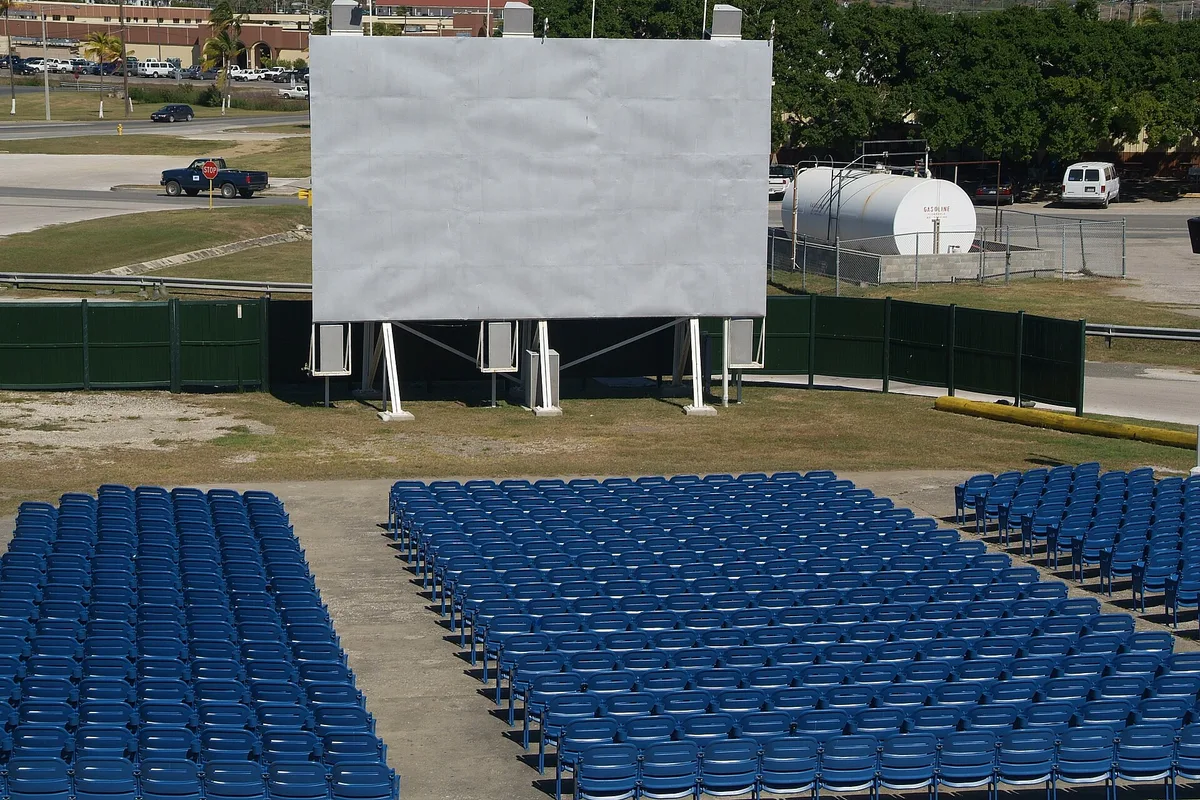
Almost every American town of a certain size used to have one: a marquee on Main Street, a matinee crowd, and the smell of popcorn at the door. Many of those houses are gone now, their buildings split into shops or left dark. The story of why they vanished says a lot about how watching movies has changed.
Strip away the neon and a movie theater is a simple thing. It is a business that holds auditoriums for viewing films, and it lives on the tickets that the public buys. The film is projected onto a large screen at the front of the auditorium, while dialogue and music play through wall-mounted speakers. When the money side of that business shifts, the buildings feel it first.
A Business on Main Street
The smallest movie theaters have a single viewing room with one screen. The audience sits on padded seats, usually set on a sloped floor with the highest part at the rear. The house typically sells soft drinks, popcorn, and candy, and some sell hot fast food. A large variety of films are shown, from animated films to blockbusters to documentaries. But a one-screen theater can run only one of them a night. Every seat, every snack, and every ticket has to carry the whole building.
When the Screens Multiplied
In the 2010s, most movie theaters had multiple screens. The largest complexes, called multiplexes, grew out of a concept developed in Canada in the 1950s, and the biggest hold up to thirty screens. A house with thirty screens can be thirty different places at once. A town's single screen could not match that menu of choices. It is little wonder that so many small houses went dark as audiences drifted toward the bigger show.
The Digital Shift
Technology added another turn. Since the 2010s, the majority of movie theaters have been equipped for digital cinema projection. That change removed the need to create and transport a physical film print on a heavy reel. For a small operator, showing a film no longer demands the same machinery. But staying open still demands the same thing it always did: enough paying customers.
Theaters also stand in a long tradition of paid spectacles. In 1838, the Royal Polytechnic Institution opened in London and became a popular venue for magic lantern shows. Lanternists used a battery of six large lanterns to project finely detailed images on a 648 square feet screen. Watching images together in the dark was an old habit long before Hollywood. A theater is also a public room. It is a place where a town meets itself, which is why the closing of one still stings. We covered a connected angle in Why Community Theaters Keep Closing.
What Fills the Space Now
Travel through small-town America today and you will spot the old houses doing new work. Some restored theaters now host concerts, plays, and community nights. Others became restaurants, shops, or apartments. Streaming has carried first-run films into the living room, so the buildings that survive tend to offer what a sofa cannot: a shared night out. The screen did not disappear. It scattered, onto phones, laptops, and home walls. For related coverage, see The New American Main Street Is Quietly Winning.
Conclusion: The Dark Marquee
The American movie theater was never only a room with a film. It was a business that had to earn its keep night after night, first against the multiplex and later against the home screen. The ones that closed left behind marquees that towns still point to with pride. The ones that adapted sell something older than movies: the plain pleasure of watching together.