Buying your first original art comes down to three questions: what is it, who made it, and what will it cost you to keep. A signed print by a working artist might run a small fraction of what a unique piece costs, and it will need the same basic care: out of direct sun, away from damp, framed properly. Most first-time buyers lose money not on bad taste but on confusion about editions, condition and provenance.
The honest starting point is that the art market has almost no price transparency. There is no sticker on a gallery wall the way there is on a car lot. Prices are negotiated, sometimes quietly, and the same artist can sell at very different levels through different channels. That is not a reason to stay out. It is a reason to learn the vocabulary before you hand anyone a card.
What is the difference between an original, a print and an edition?
An original is a unique object: one painting, one drawing, one sculpture. A print is a reproduction or a printmaking work — an etching, a screenprint, a lithograph — and it usually exists in a numbered edition. "Edition of 50" means fifty identical impressions were made. A lower number does not make an impression better; in printmaking, early and late numbers in the same edition are generally treated as equal.
The word "original" gets stretched. An "original print" made by the artist's own hand in a limited edition is a genuine original work in print form. A poster of a painting is not. Neither is a mass-run giclée with a pencil signature added. Ask plainly: how many exist, who printed them, and was the artist involved?
How much should a first piece cost?
There is no universal number, and anyone who quotes one is selling something. What you can do is set a total budget that includes the parts people forget: framing, which often rivals the price of a small work on paper; shipping; and, if you buy at auction, the buyer's premium added on top of the hammer price. A work that looks affordable framed and hung can double its real cost.
The practical move is to buy from the bottom of a real market rather than the top of a fake one. Degree shows, open studio weekends, print fairs and nonprofit gallery shops put you in front of living artists at entry prices. You are not getting a bargain in the resale sense — you are paying a fair price for work that has not yet been marked up by several intermediaries.
Where does provenance fit in?
Provenance is the record of who owned a work and how it moved from studio to you. For a brand-new piece from a living artist, provenance is simple: a gallery invoice signed and dated, ideally with the work's title, year, medium, dimensions and edition number. Keep it. That invoice is the document that lets you sell, insure or lend the work later.
For anything secondhand, provenance matters more and is harder to verify. Ask for every document that exists: old invoices, exhibition labels, correspondence. A gap is not automatically disqualifying, but a seller who cannot say where a work came from is asking you to take a risk they are not taking. Our analysis: first-time buyers should treat paperwork as part of the object. A beautiful canvas with no history is a much weaker purchase than a modest one with a clean file.
How do you judge quality without an art degree?
Look at a lot of art before you buy any. Free days at regional museums are the cheapest education available, and the spread of smaller institutions has put serious collections within reach of most cities — a shift we covered in The Rise of the Regional Art Museum Changes the Map. Train your eye on the real thing, not on screens; scale, surface and color read differently in person.
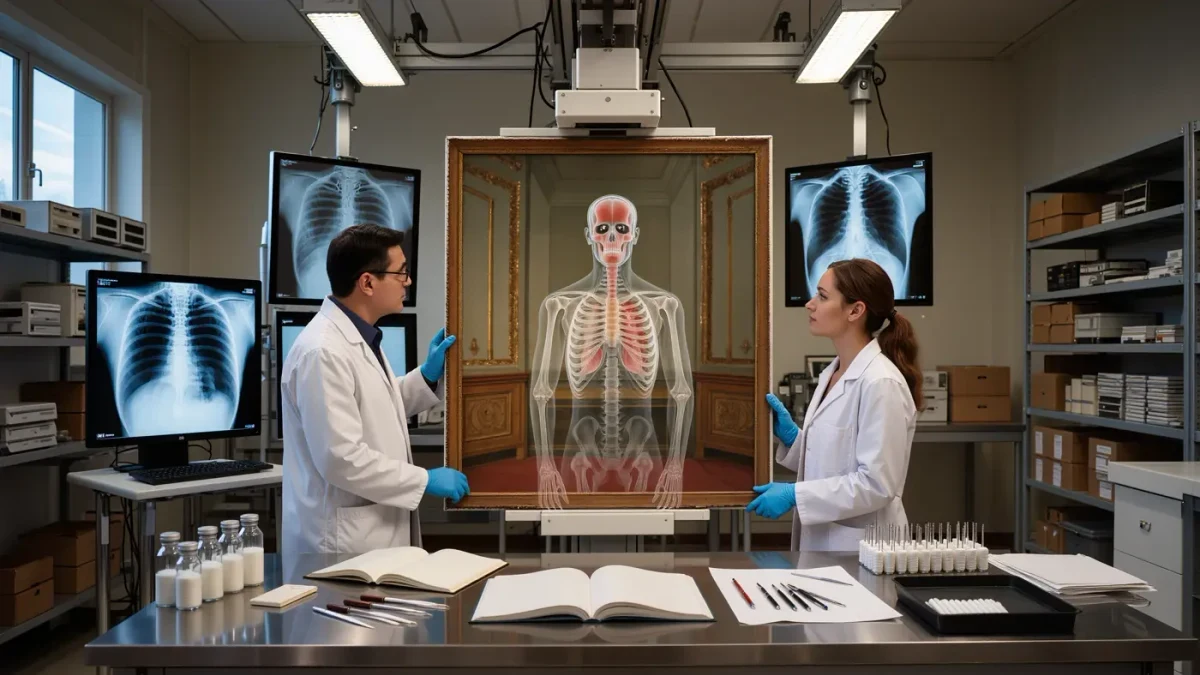
When you are in front of a candidate piece, slow down. Check condition: ripples in paper, foxing (those small brown spots), fading, tears at the edges, craquelure in older paint. Condition affects value more than most newcomers expect, and restoration is a specialist trade with its own detective work — see How Conservators Date a Painting Without a Signature for how professionals read a work's physical evidence.
- Ask the price directly. If a gallery will not state it, walk.
- Ask whether the artist has gallery representation or an auction record, and what that implies for resale.
- Ask about the edition: size, remaining availability, whether it is signed and numbered.
- Photograph the work and sit with the image for a week. Impulse fades; living with art does not.
What happens after you buy?
Hang it out of direct sunlight and away from radiators and bathrooms. UV light fades pigments and paper; humidity swells and buckles it. Use acid-free matting and UV-filtering glazing for works on paper — a framer will know the terms, and this is standard practice, not an upsell. Insure the piece once its value justifies a rider on your policy, and file the invoice with your important papers.
Keeping a simple record of what you own — images, invoices, dimensions, where you bought it — is the habit that separates a collection from a pile. Collectors in every field do this; even trading-card hobbyists track holdings with dedicated portfolio tools, and the app Collectr markets itself as a way to manage a trading card portfolio, which tells you how ordinary record-keeping has become across collecting hobbies. A spreadsheet does the same job for art.
Do not buy art as an investment on your first purchase. Some art holds value; most does not, and the costs of selling — auction fees, dealer commissions, shipping — eat thin margins. Buy the piece you want on your wall for a decade. If it appreciates, that is a bonus. If it does not, you still own something you chose, which is the entire point of the exercise.
Where a first-time buyer actually goes wrong
The recurring mistakes are consistent. Paying for a name rather than a work. Skipping the paperwork because the gallery was friendly. Framing cheaply and paying twice. Buying at the peak of an artist's fashion cycle because a friend did. And the quietest one: buying nothing, because the vocabulary felt like a gate. It is not a gate. Every term in this piece — edition, provenance, condition, buyer's premium — is a question you are entitled to ask, and a dealer who resents the questions has answered one of them for you.
Start small, buy living artists, keep the documents, hang the work where you will see it. That is the whole method. The rest is taste, and taste is the part nobody can sell you.