The 1920s still feel close because they built the machinery of modern culture. The Census Bureau counted 106,021,537 people in 1920, the first count above 100 million, and the first in which over half of Americans lived in urban places. Radio, movies, celebrities, and mass advertising arrived together.
The Wall Street crash of 1929 then ended the decade and fixed its image: exuberance with a known expiry date. Writers keep returning to the period because it runs a complete experiment in modern life, from the youth market to the star system, inside one short span. The parallels with the present are loose but stubborn. The comparison has become a genre of its own.
What Made the Twenties Feel So New?
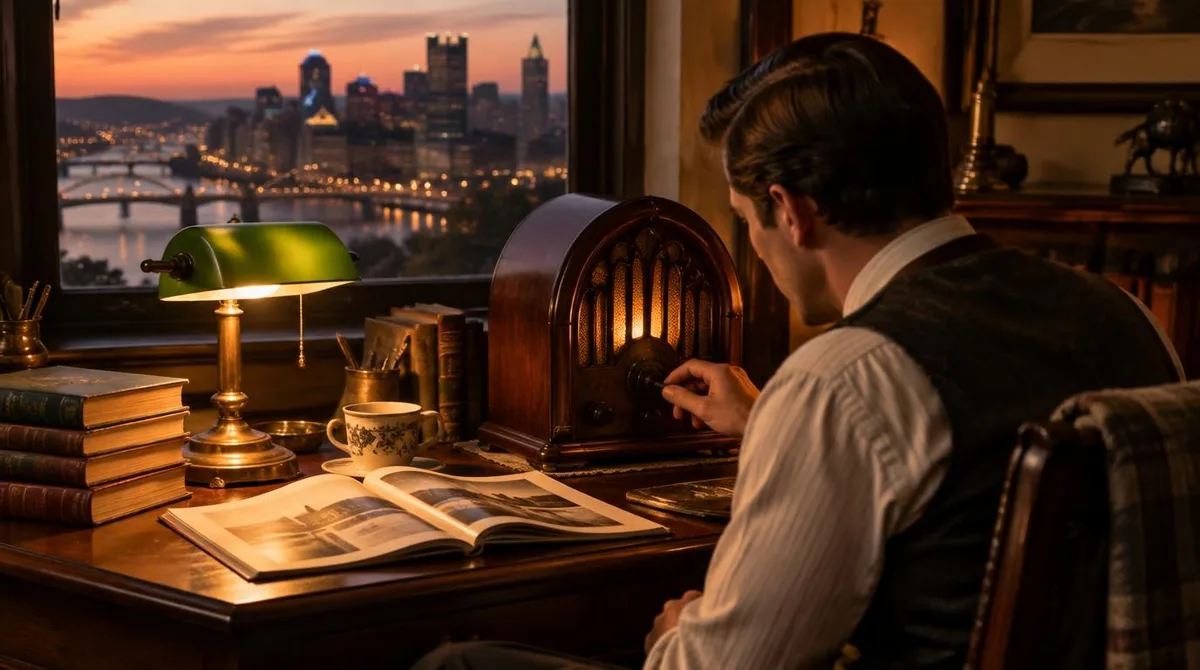
A stack of technologies reached homes at once. The decade saw large-scale use of automobiles, telephones, films, radio, and electrical appliances across the Western world. Radio moved first. KDKA in Pittsburgh aired the Harding-Cox election results on the evening of November 2, 1920, and many historians treat it as the first commercially licensed radio station in the country. A national audience formed within a few years. A set in the parlor meant shared schedules, shared stars, and shared jokes. The pattern repeats today: a device enters the household, and the household reorganizes around it.
How Did the Star System Take Off?
Mass-market advertising paid for the new media, and the media concentrated on celebrities, especially sports heroes and movie stars. Cities rooted for home teams and filled palatial cinemas and gigantic sports stadiums. The movies supplied the decade's technical leap as well. The Jazz Singer, produced by Warner Bros. in 1927, was the first feature-length film with synchronized recorded music and lip-synchronized singing and speech. Its release heralded the commercial ascendance of sound films and closed the silent era within a few seasons. Sound charged moviegoing with novelty, and audiences rewarded the risk. Fame itself became a product, sold beside the films that made it. Readers following this should also see How The Federal Writers' Project Paid America To Write Itself.
What Was the Harlem Renaissance?
Harlem hosted the decade's most lasting cultural movement: a flowering of African-American music, dance, art, fashion, literature, and scholarship, known at the time as the New Negro Movement. The name came from The New Negro, a 1925 anthology edited by the philosopher Alain Locke. The movement rose with the Great Migration, as African-American workers left the Jim Crow South, and Harlem drew the largest number of those who moved north. Its reach ran past one neighborhood, feeding music, writing, and art across the cities of the country. We covered a connected angle in Frontier Myth American Culture: Why the Frontier Still Haunts American Storytelling.
Why Do the Styles Keep Coming Back?
Art Deco peaked in the decade, replacing older, more naturalistic styles with sleek, geometric forms. Jazz blossomed, and the flapper redefined the modern look for American women; in France the same years were the années folles, the crazy years. The Roaring Twenties left a dense stock of designs, dances, and stories, and stock that photographs well gets reused. A revival needs artifacts, and few decades left so many. Fashion and film still quote the era's lines, and every quote sends new viewers back to the source.
- 1920: the census marks a majority-urban nation, and radio reaches a mass audience.
- 1920: the Nineteenth Amendment takes effect, and women vote in the November election.
- 1925: an anthology in Harlem names a movement.
- 1927: recorded sound enters feature films.
- 1929: the crash closes the decade's accounts.
Conclusion: A Decade Built for Replays
The 1920s feel current because they rehearsed the present. The 1920 census drew the urban map, radio assembled the mass audience, advertising built the attention economy, and Harlem showed how fast a culture can renew itself. The decade also carries a warning label, and the label reads 1929. Each return to the period borrows the styles and the cautionary ending together. That double frame is why the comparison never wears out. The decade is a style kit with a brake pedal, and every era drives it its own way.