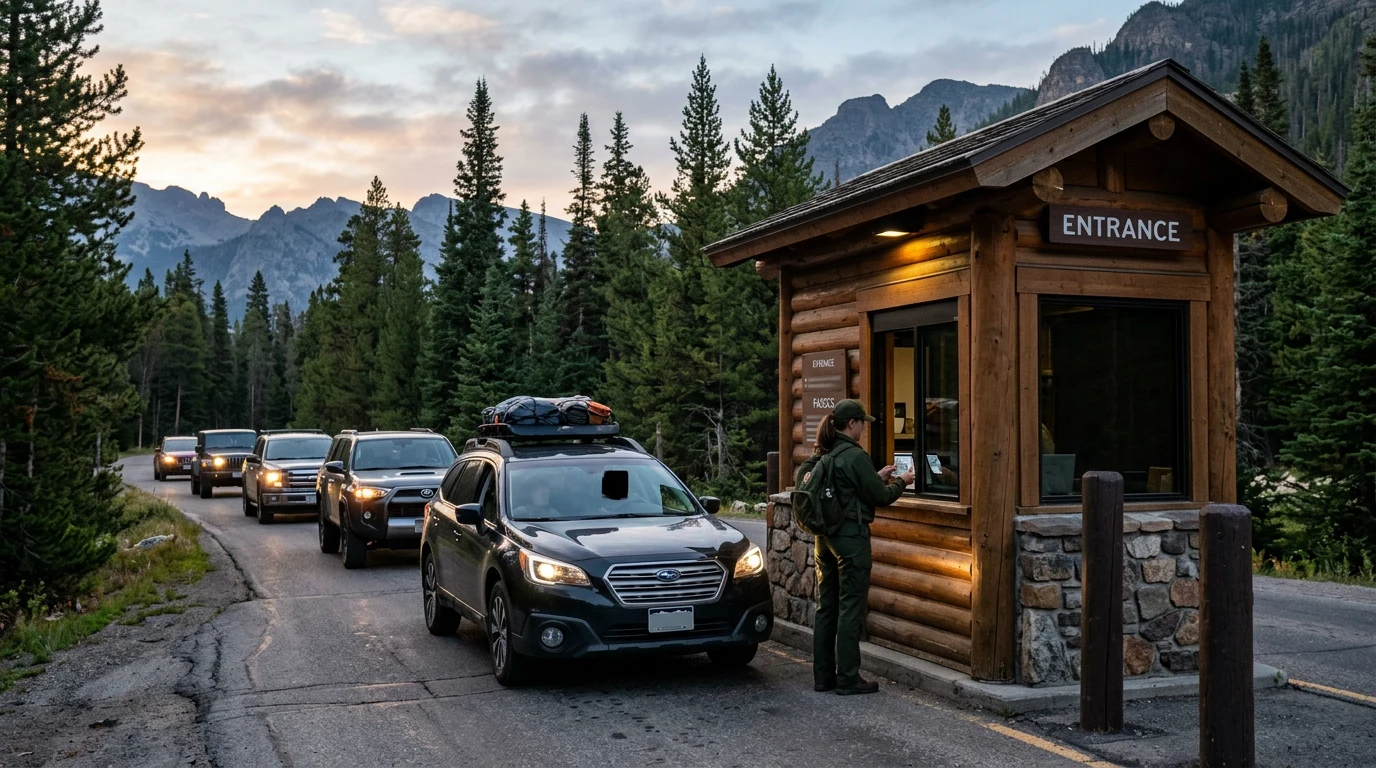
Visits to America's national parks exceeded 300 million in 2024, the National Park Service reported, with Great Smoky Mountains alone drawing more than 12 million. Urban park use told the same story after 2020: city after city recorded spikes in park attendance during the pandemic years, and the Trust for Public Land found that the overwhelming majority of Americans — over 75 percent by its 2024 city park rankings — live within a ten-minute walk of a public park. Parks are the cultural institution Americans forget they love, roughly once a generation.
Who invented the American park?
Reformers and park designers, mainly in the nineteenth century. New York's Central Park, designed by Frederick Law Olmsted and Calvert Vaux beginning in 1858, established the idea that a democratic country owed its cities shared green ground; Olmsted went on to design or advise dozens of systems, from Boston's Emerald Necklace to Buffalo's parkways. The federal idea followed: Yellowstone became the first national park in 1872, and the National Park Service was created in 1916 to run a system that now includes more than 430 units.
Why do parks keep needing to be rediscovered?
Because they are chronically under-loved in budgets between the rediscoveries. The National Park Service has carried a deferred-maintenance backlog measured in the tens of billions of dollars for years. Urban parks depend on city budgets and, increasingly, on private conservancies — Central Park is run with a large majority of its funding raised privately by the Central Park Conservancy, a model copied across the country and criticized for routing public goods through wealthy boards. Each crisis — the fiscal collapse of the 1970s, the crime fears of the 1990s, the pandemic of 2020 — sends Americans back into parks, and each recovery quietly starves them again.
What did 2020 change?
It made parks visible as infrastructure. When everything else closed, parks were the last public space standing: cities opened streets to pedestrians, park agencies reported record use, and researchers documented parks functioning as offices, classrooms and living rooms. The strongest version of the skeptic's case deserves a hearing — that the moment passed and budgets snapped back to old habits. Yet some shifts stuck: many cities kept open-streets programs, and the outdoor recreation economy, which the federal Bureau of Economic Analysis began formally measuring in 2018, kept growing past the emergency.
Are parks a cultural institution or a municipal service?
Both, which is exactly the tension. Parks are where American public culture physically happens — concerts, pick-up games, protests, weddings, the Fourth of July. Robert Moses built playgrounds and pools by the hundreds in mid-century New York as a social program; the WPA earlier employed thousands in park construction. But as a service they compete with police and paving for the same dollars, and as culture they get none of the philanthropy that museums collect. The result is a strange class system: marquee parks with rich conservancies, and neighborhood parks, often in the poorest zip codes, making do.
What is being done about the gap?
The main answers are the ten-minute-walk movement, pushed by the Trust for Public Land and adopted by hundreds of mayors, and efforts like the federal Great American Outdoors Act of 2020, which provided permanent funding for deferred maintenance and land acquisition. Some cities have experimented with park-protection districts and equity-based spending formulas that direct capital dollars where need, not political clout, is greatest. Progress is real but slow: adding parkland in dense cities means reclaiming land that already has an owner.
What would taking parks seriously look like?
Less rediscovery, more maintenance. A country that funds parks as permanently as it funds roads would stop asking whether parks matter every time a crisis proves it again. Olmsted's original argument was that shared ground is what makes city-dwellers into citizens rather than neighbors who merely tolerate each other. A century and a half of evidence, including a pandemic, has not contradicted him — it has just never been enough to keep the budget line from shrinking until the next emergency sends everyone back outside.
Which parks are most at risk?
The ones without constituencies. City budget documents repeatedly show the pattern: flagship downtown parks with conservancies and wealthy boards stay immaculate, while neighborhood parks in the South and West Sides of Chicago, the East Side of Buffalo or whole swaths of Detroit wait years for basics — working water fountains, unbroken benches, mowing. The Trust for Public Land's equity mapping made the gap visible street by street, and cities including New York and Philadelphia have since adopted need-weighted capital formulas. Rivers, rail lines and highways were routed through the same neighborhoods that now lack parkland, which means the park gap and the health gap and the heat-island gap all trace to the same map.
What do parks do that nothing else does?
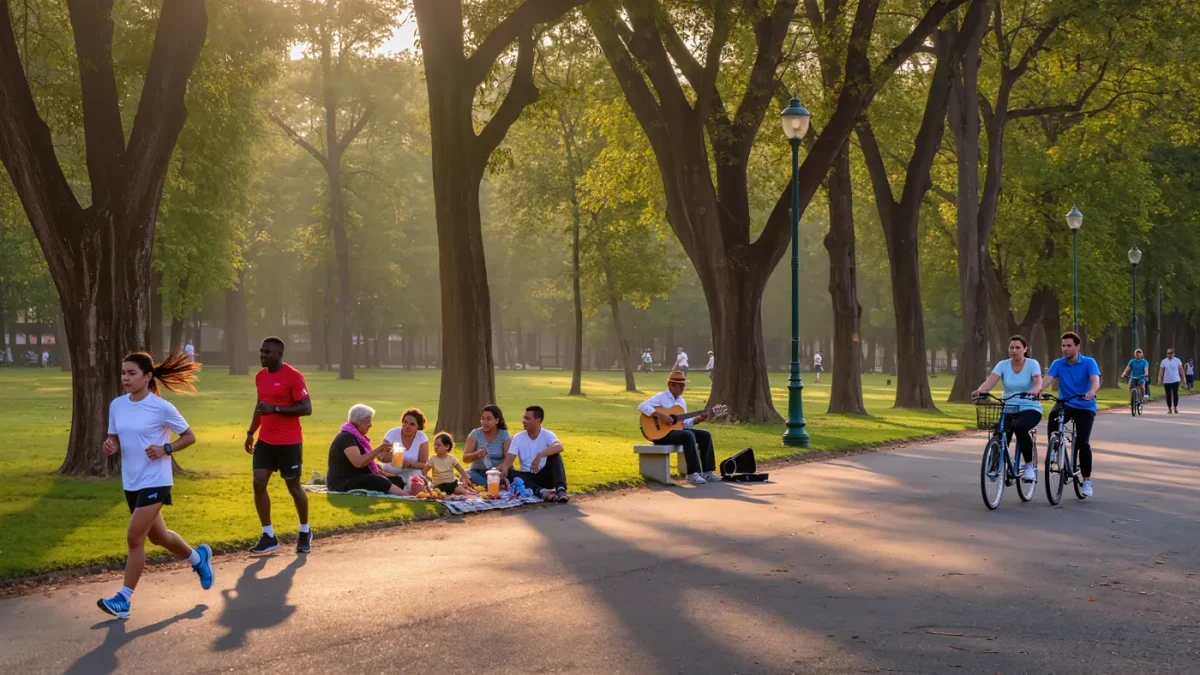
They put strangers in shared space with nothing to buy. Every other American gathering place is commercial or private: the mall, the stadium, the coffee shop, the app. A park bench costs its occupant nothing and asks nothing, which is why parks host the parts of public life no venue would program — the chess players in Washington Square, the quinceañera photos in a Los Angeles park, the perm示威-free soapbox in Boston Common, continuously used for public assembly since 1634. Climate has added a hard-headed case: tree canopy lowers neighborhood temperatures measurably, and urban flood control increasingly doubles as park design. The sentimental argument for parks was always easier to cut; the engineering argument, cities are learning, is not.
Do parks pay for themselves?
Increasingly, cities argue they do. Studies of park-adjacent property values have long shown a premium near well-maintained green space, and health economists translate park access into measurable savings on chronic disease. The Trust for Public Land's economic analyses estimate returns of several dollars in property tax and health value per dollar invested in parks — figures advocates cite and skeptics call optimistic, since they count benefits that never appear in a parks department budget. The more defensible version is quieter: parks are cheap relative to what replaces them when people have nowhere free to go.