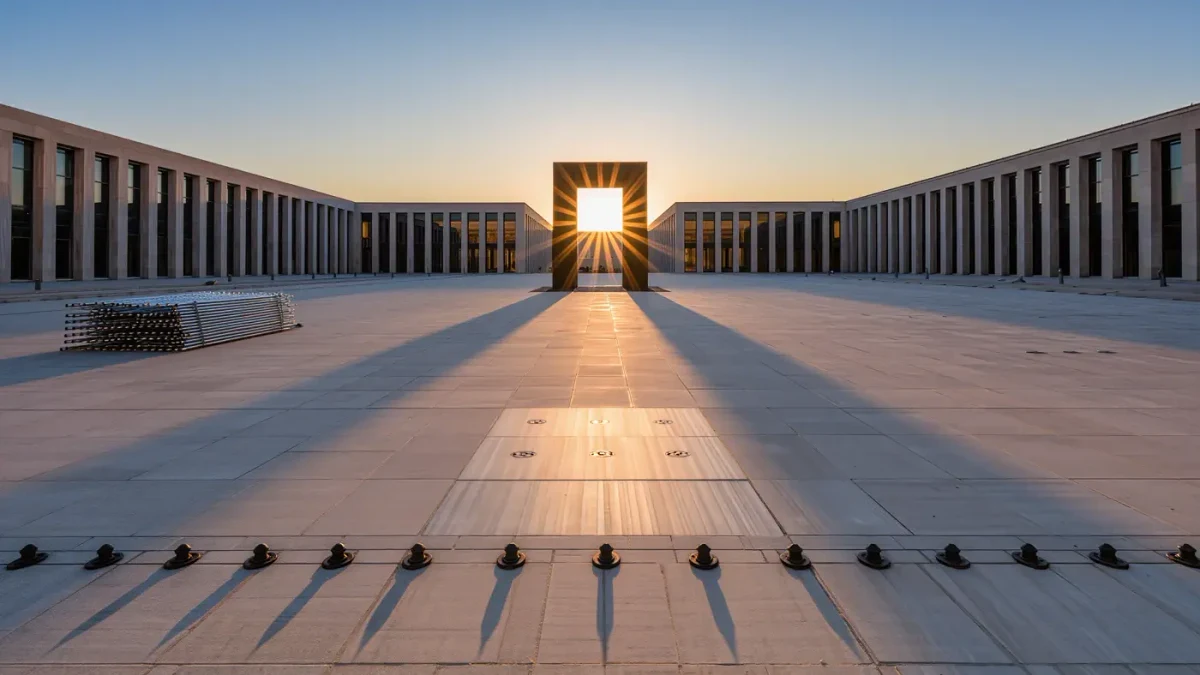
Public art divides cities because it spends public money on a private vision, and it puts that vision somewhere nobody can avoid seeing. A painting in a gallery is a choice. A forty-foot steel shape on the plaza is a fact of daily life. The Cambridge Dictionary defines "why" as asking for what reason or purpose — and with public art, the reason is rarely just beauty. It is memory, power, and who pays.
Yet the same works that spark fights also become the things a city loves. People meet under them. They photograph them. They mourn them when they come down. The argument and the affection come from the same place: the work belongs to everyone, so everyone gets a say.
Here is a plain guide to why the fights happen, why the delight is real too, and what the pattern tells us about how American cities decide what their shared spaces should say.
What counts as public art, exactly?
Public art is art placed in open, shared space — plazas, parks, transit stations, building walls — usually commissioned or approved by a government or a public body. Murals, monuments, sculptures, and even light installations all fit. The key word is "public": the work occupies space owned or governed collectively, and often funded collectively too.
That funding detail matters. Many American cities run percent-for-art programs, which set aside a slice of a capital construction budget for artwork. The logic is straightforward: if the whole city pays for a building, the whole city gets something more than a building. But the moment public money flows, the work stops being just an artist's statement. It becomes a civic decision, and civic decisions get argued over.
Private murals on private walls can still cause trouble, of course. But the fights with real stakes — hearings, votes, removals — almost always involve a public process. That process is the arena.
Why do monuments cause the loudest fights?
Monuments carry the heaviest load because they make a claim about history, not just taste. A statue says: this person mattered, and we want you to remember them this way. When a community's understanding of that person changes, the statue does not change with it. It just stands there, repeating an old argument.
The strongest case for keeping contested monuments is that removal erases evidence — that the statue itself teaches what a city once honored, and that context or counter-monuments can do the correcting. The strongest case for removal is that a monument is not a textbook; it is an honor, and honors can be withdrawn. Both positions deserve a fair hearing, and most cities end up somewhere in the middle: some works recontextualized, some moved, some taken down after long public process.
The pattern to notice is that nobody fights a monument over its craftsmanship. The fight is always over the message. That is why monument disputes outlast the artist's lifetime and the donor's — the artwork is the occasion, but history is the subject.
Why do murals divide people differently?
Murals divide on a shorter clock. A mural is painted fast, ages fast, and can be painted over. That makes mural disputes feel more like neighborhood zoning fights than history wars. The questions are local: Does this wall reflect our block? Who chose the image? Was anyone on this street asked?
There is also a gentrification wrinkle. Murals are often painted to celebrate a neighborhood's identity — and then used, fairly or not, as a signal that the neighborhood is now "vibrant" enough to redevelop. Residents can watch a mural honoring their community become a backdrop in real estate listings. The art did not cause the change, but it got drafted into it.
On the other side, murals are the most accessible art form America has. No ticket, no door, no etiquette. A kid waits for a bus in front of a portrait of local heroes and learns who they were. That accessibility is why cities keep commissioning them even after every fight.
What this means: the fight is a feature, not a bug
Here is our analysis of the pattern. A city that never argues about its public art is probably not commissioning anything that matters. Indifference is the real failure state, not controversy. The works that divide people on arrival are usually the ones that get adopted once the shouting stops — because adoption requires noticing, and controversy guarantees noticing.
The practical steps a city can take are well understood, even if rarely followed perfectly. Put real community input at the front of the process, not a hearing after the design is fixed. Separate the taste question from the values question: a panel can judge craftsmanship while the public weighs meaning. And plan for the work's whole life — maintenance, eventual removal, and what replaces it — before the ribbon is cut.
None of this ends the arguments. It just makes them fairer. And fairer arguments produce better art, because artists do their best work when the brief is honest about who is watching.
Why does public art delight cities at all?
Because it rewards attention in places built for errands. A plaza is a shortcut until there is a sculpture in it. Then it is a landmark, a meeting point, a place in the mental map. Cities run on those anchors, and art supplies them cheaply compared with almost anything else a government can build.
There is also the delight of recognition. When a mural gets a neighborhood right — its actual people, its actual history — the people in it feel seen in a way no plaque achieves. That feeling is the return on the whole investment, and it is why the same residents who fought a commission will defend the finished work years later.
The division and the delight are not opposites. They are the same ownership, expressed twice.
The takeaway
Public art is the rare civic project where the argument is part of the deliverable. A road either works or it does not; a mural starts a conversation that may run for decades. Cities that understand this commission boldly, consult early, and resist the urge to please everyone on day one — because the works that end up beloved are usually the ones that started a fight. For a closer look at specific battles and how they played out, our Public Art Controversies: A Field Guide walks through the recurring types. And for the wider context of how shared institutions get funded and argued over, see Who Actually Pays For The Public Library — And Why Washington Barely Does and Who Restores America's Depression-Era Murals.