Between 1934 and 1943, federal employment programs commissioned tens of thousands of works of art, including more than a thousand murals for post offices and public buildings through the Treasury Section of Painting and Sculpture. Nine decades later, many of those murals are still in place — faded, overpainted, damaged by roof leaks, or rolled up in storage — and a small professional ecosystem exists to put them back. The conservators who do this work move between government buildings and local fundraising campaigns, one post office at a time.
Who owns these murals?
Ownership depends on the program that made them. Murals commissioned for federal buildings generally remain federal property, and where a building has been sold or repurposed, the works often stay under federal stewardship rather than passing to the buyer. Because so many New Deal murals live in post offices, the United States Postal Service is effectively one of the country's largest involuntary art custodians. Add works in schools, courthouses, libraries, and hospitals, and the collection sprawls across thousands of buildings run by agencies whose core mission is anything but art conservation.
For non-federal works, custody typically rests with whatever institution houses them — a school district, a city, a university. This is why the fate of two murals by the same artist, painted the same year, can be entirely different: one is restored under a federal review process, the other depends on a middle-school principal noticing water damage in the auditorium.
What do the conservators actually do?
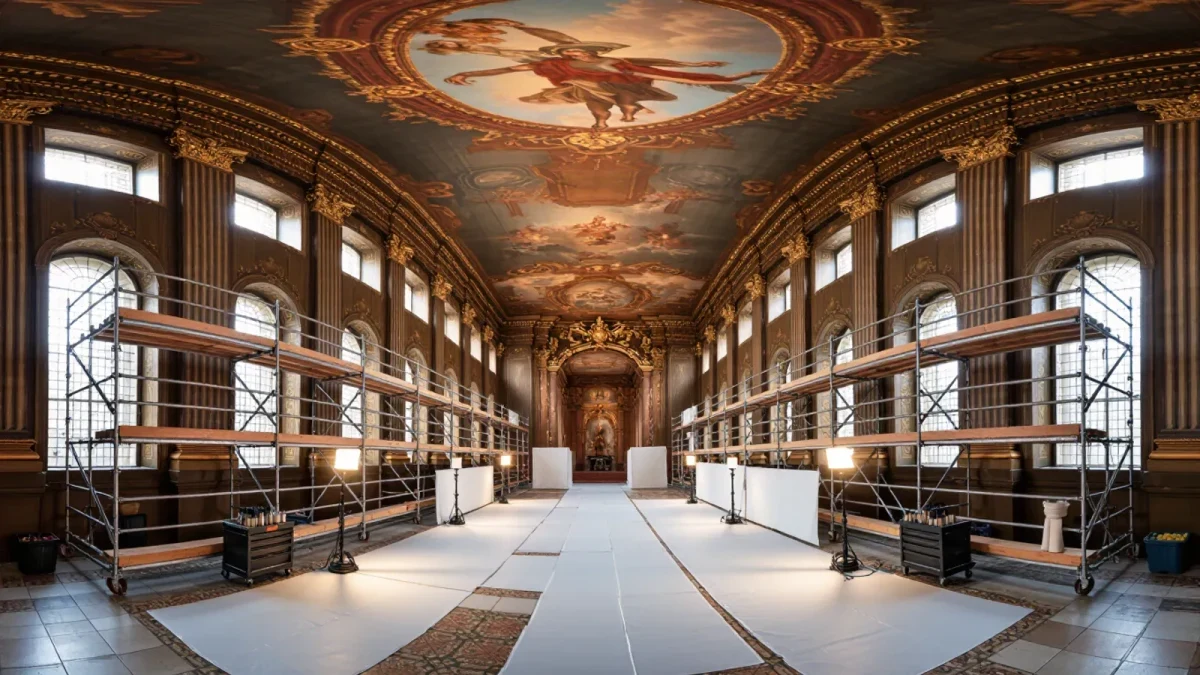
The work follows the standard discipline of wall painting conservation, adapted to awkward sites. A typical project begins with documentation and analysis: examining the mural's structure, identifying the original materials, and diagnosing whatever has happened since — grime, overpaint, flaking paint layers, water infiltration, structural cracks in the supporting wall. Treatment may involve consolidating flaking paint, removing later overpaint, filling losses, and inpainting losses in a way that remains detectable on close inspection, according to professional codes of reversibility.
The setting complicates everything. A mural in a working post office must be treated around business hours, often on a lift, under security rules, with the conservator doubling as public interpreter. Community sentiment matters too: local residents frequently have strong opinions about 'their' mural, and conservators spend as much time explaining what they are doing as doing it.
How are restorations funded?
Patchily. Federal custodians can fund conservation through their own arts and historic preservation programs, and Save America's Treasures grants — a federal matching program administered with the National Park Service — have paid for many high-profile New Deal conservation projects. But much of the money is local: historical societies, community foundations, service clubs, and dedicated volunteers who spend years raising five or six figures to treat a single lobby wall. Professional standards for treating WPA-era works require qualified conservators, and the work is expensive, which is why the limiting resource is less expertise than budget.
What happens when a mural is controversial?
Restoration sometimes stalls on content. A number of New Deal murals depict Native Americans, African Americans, and labor in ways that read very differently now than in 1939, and communities have debated covering, contextualizing, or removing specific works. Professional guidance generally favors interpretation over destruction — panels, digital resources, revised wall texts — and several institutions have added context rather than taking murals down. The controversy is itself a reason the murals matter: they are primary documents of how the 1930s state wanted to see the country.
Why do the murals matter beyond nostalgia?
The New Deal art programs were an experiment in treating artists as workers deserving of wages, and the murals were the visible output. They put contemporary scenes — industry, agriculture, mail delivery, local history — into ordinary buildings in small towns that had never expected to own original art. Unlike a museum painting, a mural cannot be moved to storage; conserving it means conserving the building and the community around it. That is the real difficulty and the real point of the work.
It is also a race against neglect. Every year, some murals are lost to renovation, demolition, or slow water damage, while others emerge from behind paint or drop ceilings. The people doing the restoring are few, the inventory is large, and the deadline is indefinite but real. If there is a New Deal mural in your town, someone — often a volunteer — is probably already keeping an eye on it.
How can you track down murals near you?
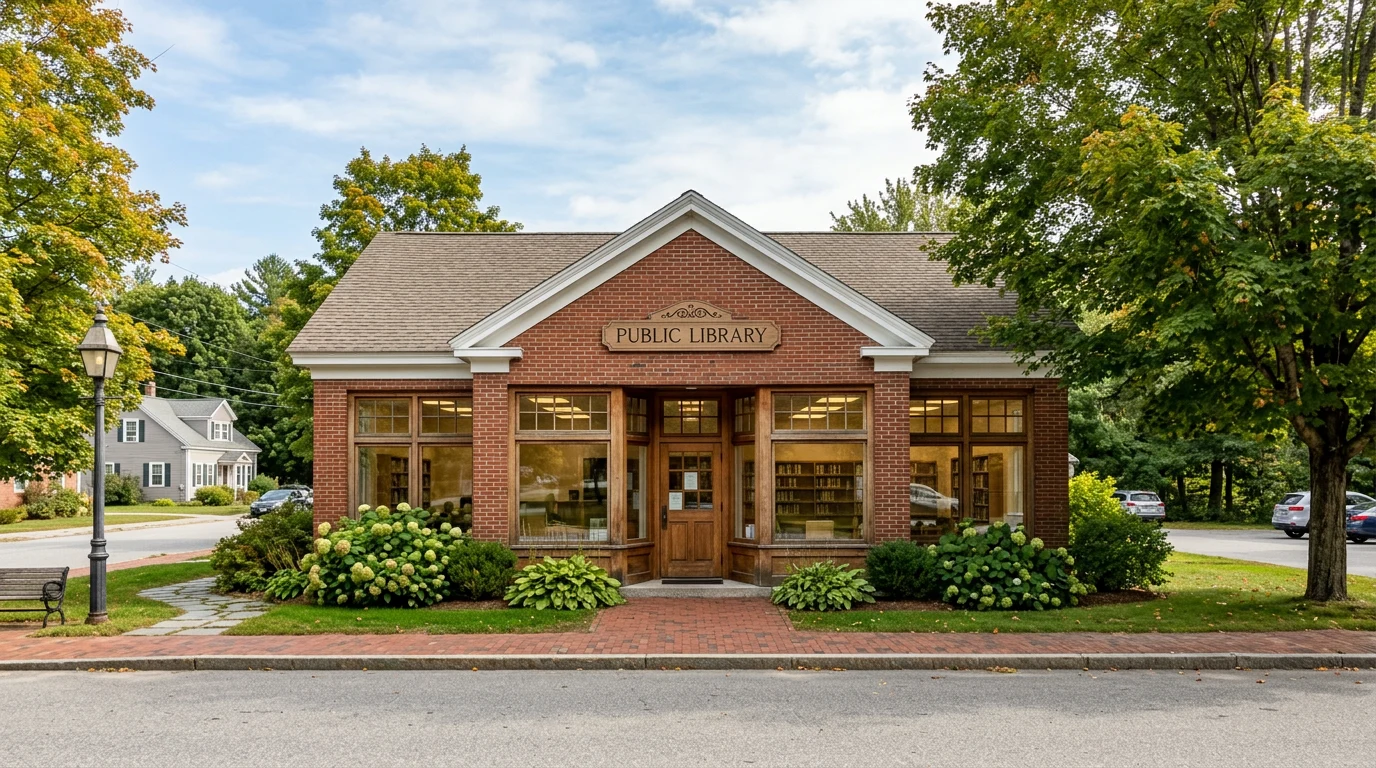
Start with the inventories. The Smithsonian American Art Museum maintains research databases indexing New Deal art, and the General Services Administration documents federally commissioned works, including those in buildings no longer government-owned. State historic preservation offices keep files on many works, and dedicated volunteer projects have surveyed New Deal sites county by county. If a mural hangs in your local library, the librarian often knows its history better than any database — including whether anyone is currently raising money to restore it, which is the question that actually matters.