Street photography owns the American eye because it made the ordinary city worth looking at. While portrait studios posed people and painters staged scenes, a handful of photographers walked out the door and photographed life as it happened. The dictionary asks why means "for what purpose, reason, or cause" — The Free Dictionary defines it that way — and the purpose behind this genre was simple: to see America without asking it to hold still.
The answer to why the style stuck is also practical. It needed no set, no models, and no permission beyond nerve. It turned the sidewalk into a stage and the stranger into a subject. Over time, that habit of looking became the country's default picture of itself: candid, crowded, a little rough, and honest in a way a posed picture rarely is.
What exactly is street photography?
Street photography is candid picture-making in public places. The photographer does not arrange the scene. People are caught walking, waiting, arguing, laughing, or simply passing through. The setting can be a sidewalk, a bus, a beach, a diner, or a stoop. What matters is that the moment was found, not made.
That found quality is the genre's signature. A studio portrait tells you how someone wanted to be seen. A street photograph tells you how someone looked when they thought no one was watching. The difference is the whole point, and it is why the genre feels closer to diary than to art direction.
Why did the tradition grow up in American cities?
American cities in the twentieth century were dense, public, and full of strangers. That combination is fuel for this kind of work. A photographer could ride a subway for an hour and see more human variety than a studio would offer in a year. The city supplied the drama; the photographer only had to be there with a camera ready. This connects to our earlier piece, Public Art Controversy — Why Public Art Divides Cities — And Delights Them.
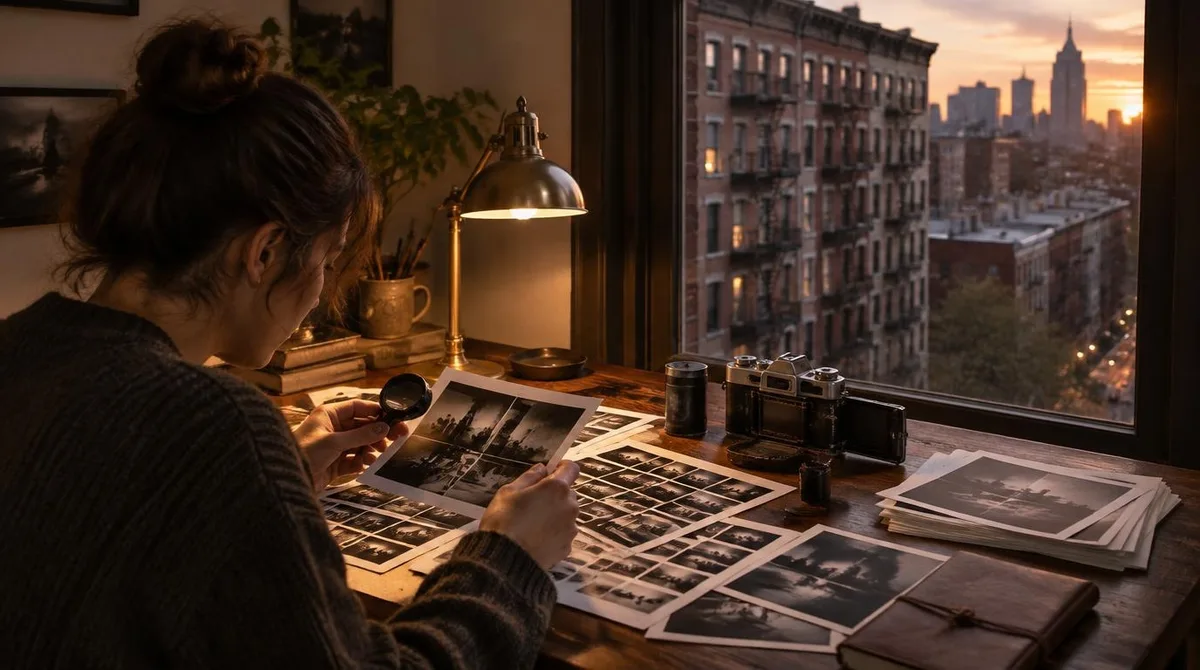
The tradition also grew because American photographers were drawn to a particular question: what does daily life here actually look like? Not the monuments and not the postcards, but the lunch counters, the fire escapes, the kids playing in the spray of an open hydrant. Answering that question meant working in public, unscripted, among people who never asked to be in a picture.
There is a real tension in that, and honest writing about the genre has to name it. Photographing strangers raises questions about privacy and consent that the early practitioners mostly shrugged off. Today's street photographers think harder about who gets photographed and who gets published. The best of the current generation treat the people in the frame as neighbors, not as material. That shift matters, and it is one reason the genre keeps renewing itself instead of becoming a museum exercise.
How did the pictures change what Americans expected from photography?
Street work quietly reset the rules. Before it, a photograph was expected to be composed, deliberate, and usually posed. The street photographers showed that a picture could be quick, off-balance, and partly accidental and still carry more truth than a careful setup. Blur, odd cropping, and a stranger's sideways glance became legitimate tools rather than mistakes.
That change spread far beyond the genre. Photojournalism, documentary projects, and eventually the family snapshot all absorbed the street habit of catching life mid-motion. When someone today raises a phone to grab a moment without staging it, they are using the grammar this tradition wrote. The candid frame is now the country's native visual language.
Why does the genre keep finding new audiences?
Two reasons. First, the equipment barrier collapsed. A camera that fits in a pocket means more people can practice the craft, and the practice is open in a way that, say, mural painting or printmaking is not. You do not need a degree or a studio lease. You need attention and time on the sidewalk.
Second, the subject never runs out. Cities change, blocks change, fashion changes, and the street records all of it without being asked. A picture of a corner today becomes a document in thirty years, whether the photographer intended one or not. That built-in time capsule quality gives the genre a long afterlife that trendier art forms lack.
Our analysis: the genre's durability comes from a bargain. The photographer gives the street attention, and the street gives the photographer history. Neither side has to promise anything in advance. That loose, patient contract is hard to break, which is why pictures made decades ago still feel current, and why new ones keep arriving.
What should a newcomer look for in the work?
Look for pictures that reward a second look. The best street photographs work like good short stories: the first glance gives you the scene, and the second gives you the detail you missed. A hand on a shoulder. A mismatched pair of shoes. A sign that contradicts the face beneath it. The pleasure is in the discovery, not in the spectacle.
Also look for honesty about place. The strongest work in this tradition is rooted in a specific block, a specific neighborhood, a specific era. It resists the generic. If a picture could have been taken anywhere, it usually matters less than one that could only have been taken there. That local grounding is what separates the memorable practitioners from the merely skilled ones.
For readers who want the wider context of how institutions shape what gets shown, our piece on How Museums Decide What Goes on the Wall — And Who Decides covers the gatekeeping side. And for the argument over art in shared space, Public Art Controversy — Why Public Art Divides Cities — And Delights Them takes up the same public-street turf from a different angle.
What this means for the American eye
The evidence here points to a simple conclusion. Street photography owns the American eye because it taught the country that its everyday self was worth framing, and because the method it used — candid, public, cheap, and patient — turned out to be endlessly repeatable. What remains unknown is how the genre absorbs the next shift in technology and privacy expectations. What is established is that the habit of looking it built is not going away. The sidewalk is still the country's most reliable gallery, and admission has always been free.