Between August 1935 and 1943, the Works Progress Administration's Federal Art Project employed roughly 5,000 artists, muralists, printmakers, and poster designers at wages of about $23 to $42 a week, producing more than 100,000 paintings, over 2,500 murals, and a network of more than 100 community art centers. It remains the largest single patronage program for visual art in American history, and it happened because of a depression.
What exactly was the Federal Art Project?
It was a division of Federal Project Number One, the WPA's umbrella for arts programs, created in 1935 alongside parallel projects for writers, theater, and music. Holger Cahill, a curator who had organized exhibitions at the Newark Museum and the Museum of Modern Art, served as its national director from his appointment in 1935 until the project closed. Artists had to pass a means test proving poverty, which most of them did not find difficult in 1935, when galleries closed and collectors vanished. The premise was simple and, at the time, radical: unemployment insurance for painters took the form of commissions rather than relief checks.
The FAP was not the first New Deal art program. The Treasury Department's Section of Painting and Sculpture, begun in 1934, had already commissioned murals for federal buildings, and the Treasury Relief Art Project followed in 1935. But the Treasury programs ran competitions and awarded commissions to established names. The FAP, by contrast, hired people, put them on payroll, and sent them wherever the country needed paint. That distinction shaped everything that followed, because payroll means a hierarchy of supervisors, regional offices, and assignment sheets, and a surprising number of the era's best artists spent the late 1930s filling them out.
Who actually got paid, and how much?
At its height the project carried about 5,000 artists across 48 states, along with thousands more employed as teachers, carpenters, framers, and clerks in the art center network. Wages ran from roughly $23 a week for a beginning easel painter in the South to about $42 a week for a muralist in New York, which was marginally less than a factory wage but considerably more than the nothing most artists had earned in 1934. The rolls included Jackson Pollock, Mark Rothko, Willem de Kooning, Lee Krasner, Arshile Gorky, Stuart Davis, Ben Shahn, and Jacob Lawrence, along with thousands of names no museum has hung since.
The equalizing effect was deliberate. A project survey found that a large share of the artists had never sold a serious work before enrolling, and the FAP's teaching assignments put many of them in front of students for the first time. Charles White taught in Chicago, Norman Lewis and Georgette Seabrooke worked in Harlem, and the mural divisions trained assistants who carried workshop methods into the postwar art schools. The economy that later made Abstract Expressionism possible, with its lofts, its arguments, and its shared vocabulary of large-scale work, was rehearsed on federal time sheets.
Why did the government want murals in post offices?
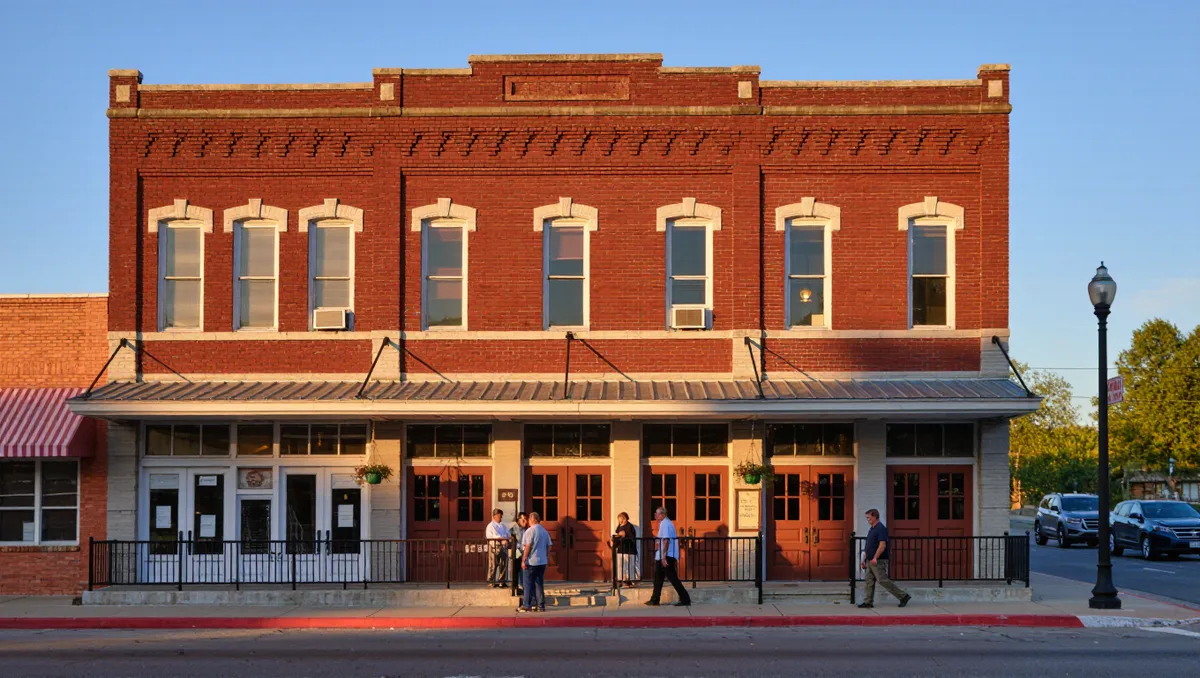
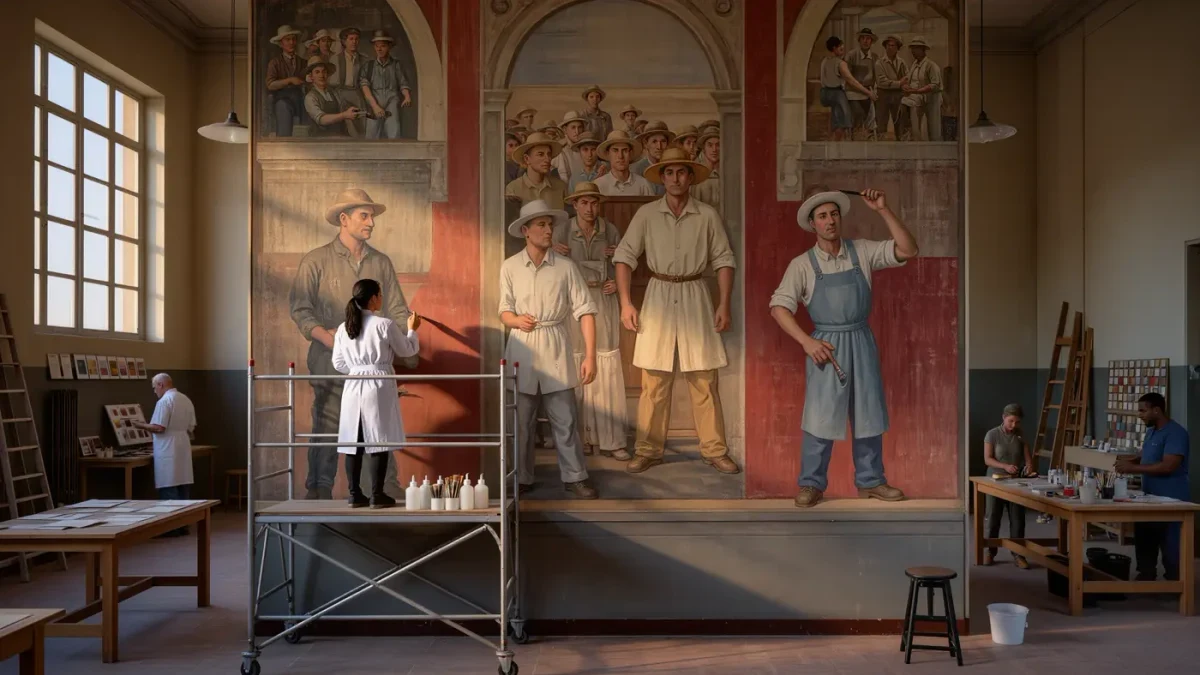
Because the New Deal believed, with a conviction that now looks either touching or prescient, that ordinary citizens deserved to encounter art where they already stood. Between 1935 and 1943 the FAP and its Treasury cousins placed murals and sculptures in post offices, courthouses, schools, hospitals, and libraries in well over a thousand communities, most of which had never commissioned a work of public art. The murals favored local history, labor, industry, and the dignity of settlement, a house style that critics later dismissed as propaganda but that communities tended, and still tend, to regard as their own.
The most visible legacy sits in the federal buildings themselves. Ben Shahn's 1939 murals in the Bronx Central Annex Post Office, Phillip Evergood's work in a Queens library, and hundreds of lesser-known cycles in county courthouses from Ohio to New Mexico survive in place, scrubbed and conserved, because tearing out a mural means tearing out a wall. The post office mural program became one of the most durable art distribution schemes ever devised: no admission, no hours, no guard standing between the citizen and the picture. It is worth noting that the subscriber to this logic was the same federal establishment that would later be accused of funding degeneracy, and that Congress investigated the project's murals for subversive content more than once.
What was a community art center?
It was the FAP's most ambitious invention: a free gallery, classroom, and workshop rolled into one, usually in a rented storefront, set in cities and towns with no existing museum. More than 100 opened between 1936 and 1942, from the Harlem Community Art Center, founded in 1937 under the direction of sculptor Augusta Savage, to centers in Oklahoma, North Carolina, and Spokane. Collectively they logged millions of visits, offered painting and printmaking classes at no charge, and mounted rotating exhibitions of project work that reached an estimated audience in the millions annually.
The centers mattered most where museums did not exist, which was most of the country. Harlem's center trained a generation of artists who later defined American painting, and its alumni and instructors included Romare Bearden, Jacob Lawrence, and Norman Lewis. The Southern centers, often the only exhibition venues in segregated towns that admitted Black visitors at all, quietly integrated their classrooms in the 1930s, a fact that drew considerably less congressional attention than the murals did. When the FAP closed in 1943, many centers folded within months, but a few, including the Spokane Art Center's institutional descendants, lived on as the nuclei of permanent museums.
What happened to the posters, prints, and the Index of American Design?
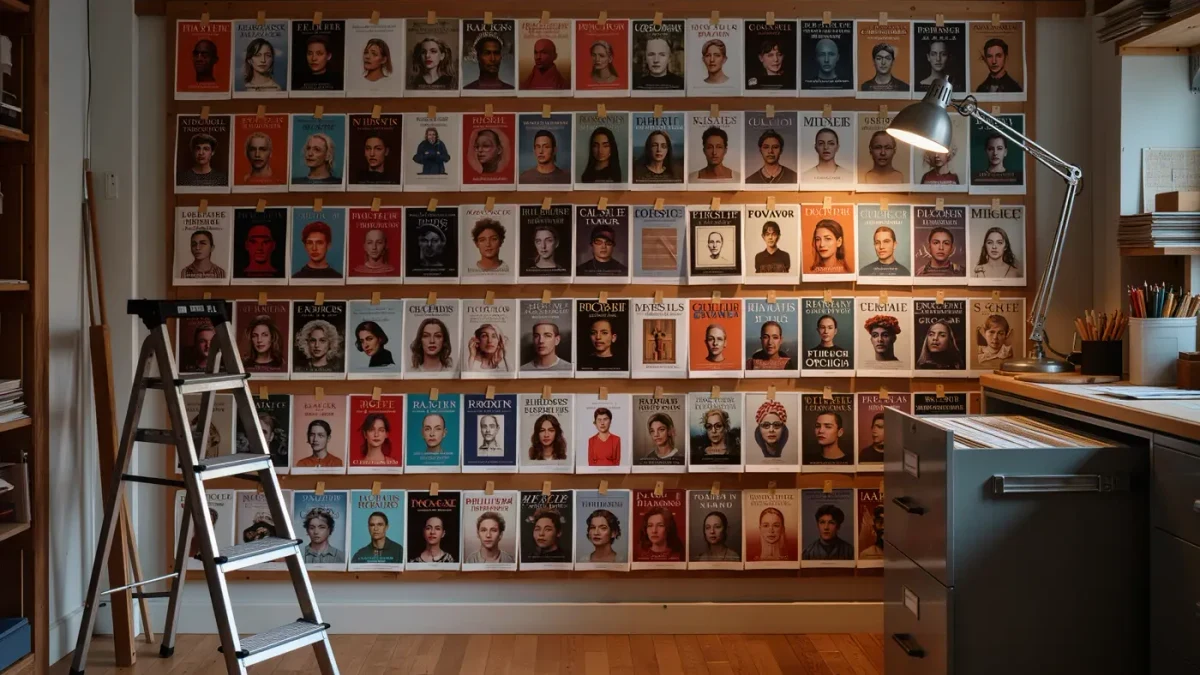
The FAP's least glamorous divisions turned out to be its most widely seen. The poster workshop in New York, organized by Richard Floethe, produced some 35,000 poster designs and printed millions of individual sheets advertising health campaigns, theater productions, travel, and war bonds; the silkscreen methods its staff perfected became the standard technique of American poster art for a generation. The graphic divisions ran community print shops that made fine art prints affordable, with editions selling for a few dollars, and the project's photography and publicity units supplied images to schools and libraries on request.
The Index of American Design, a research division Cahill had championed since his Newark days, sent artists to make some 18,000 meticulously rendered watercolors of American folk and decorative objects: carousel figures, weather vanes, Shaker furniture, shop signs, quilts. Published in facsimile volumes and later donated to the National Gallery of Art, the Index preserved a material culture that was already vanishing in 1940 and now documents objects that no longer exist anywhere. Alongside it, the project's inventory of easel paintings was allocated to public institutions by the thousands, on the condition that works stay accessible to the public, which is why so many small museums in unexpected towns own a genuine Pollock or Rothko from the era.
Why did it end, and what survived?
It ended the way Federal One ended: Congress lost patience. Wartime prosperity had emptied the relief rolls, and the art projects had been a recurring target of the House Committee on Un-American Activities, which held hearings on subversive content in WPA art throughout 1938 and after. In June 1942, President Roosevelt ordered a liquidation of the non-war-related arts projects, and the Federal Art Project formally closed in 1943, its remaining functions folded into shorter-lived war programs. Most of its records and much of its photographic archive went to the Library of Congress and the National Archives, where they remain among the most consulted holdings of the New Deal era.
The survivors are everywhere once you know to look. Murals in post offices, WPA watercolors in regional museums, the Library of Congress's collection of nearly 2,000 poster originals, the Index watercolors in Washington, and several thousand buildings whose ornament was carved by project artisans between 1935 and 1940. The deeper legacy is institutional: the FAP demonstrated that federal patronage could reach artists before the market validated them, an argument Congress accepted again, on a far smaller scale, when it created the National Endowment for the Arts in 1965. The painters themselves were less sentimental. Pollock, asked years later about his WPA years, described them as a job, which is precisely what made them extraordinary.
Where can you still see the work today?
In post offices and courthouses across the country, in the National Gallery of Art's Index of American Design collection, and in the Library of Congress's WPA poster collection, which has been substantially digitized. Regional museums from Spokane to Wilmington hold FAP allocations, and the General Services Administration maintains a running census of the roughly 1,400 surviving federal murals. The buildings are usually open during business hours, admission is free, and the guard, if there is one, is likely to be behind the stamp counter.