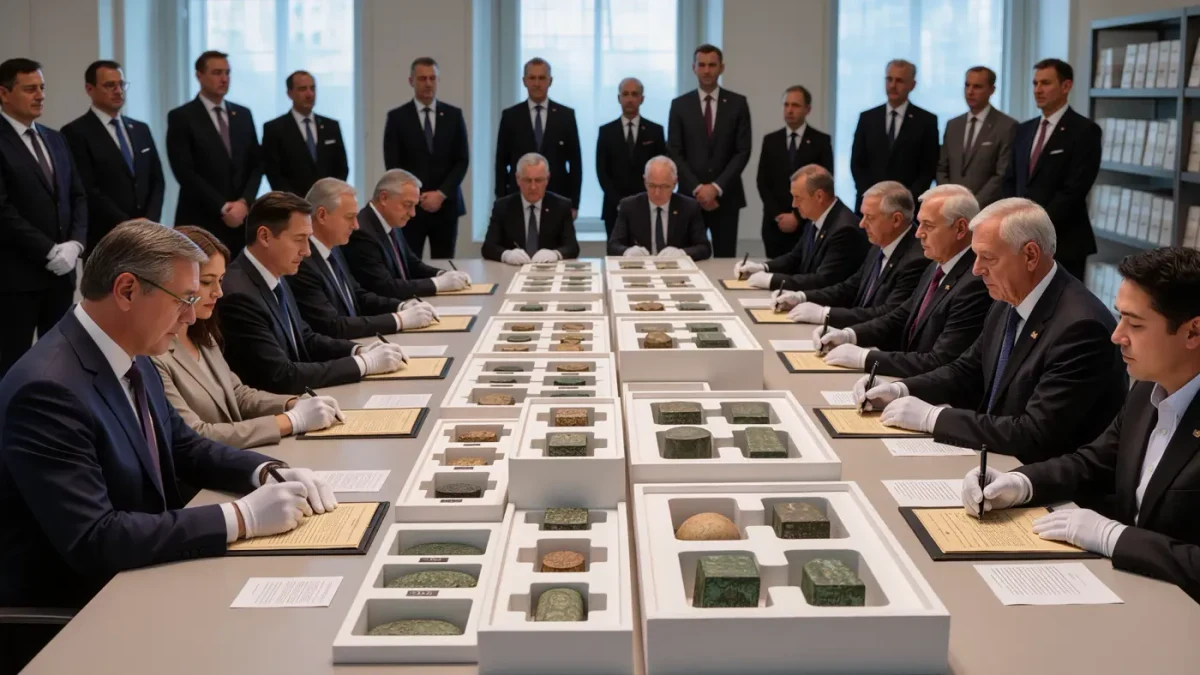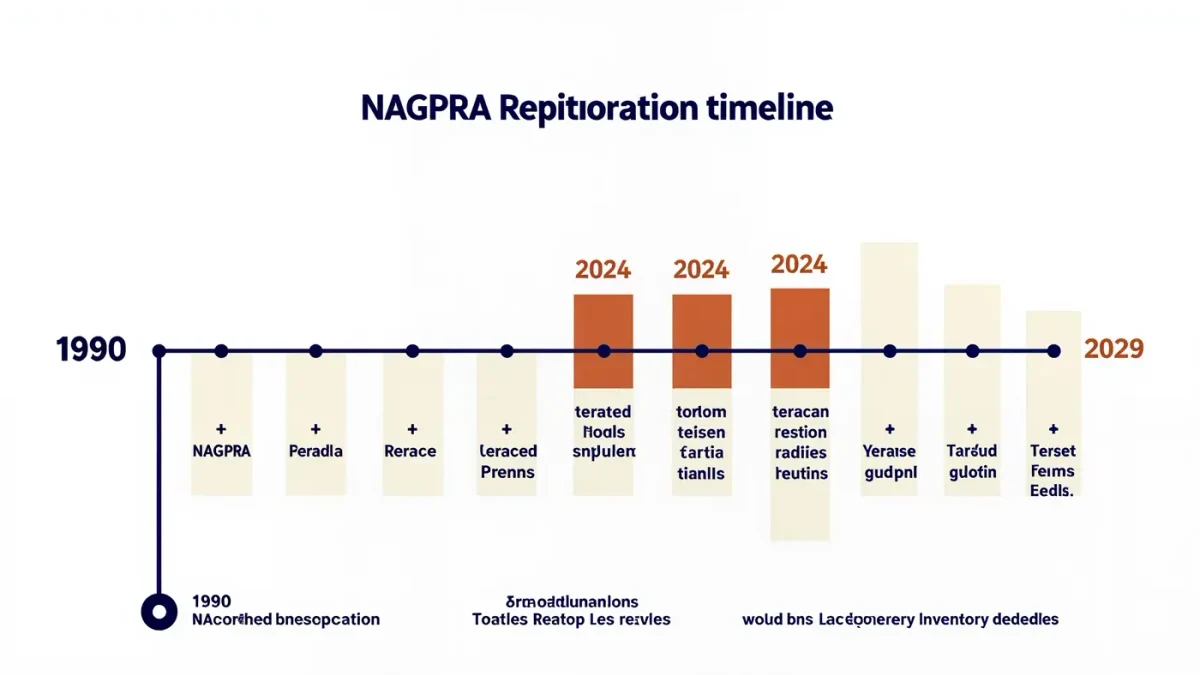
In January 2024, revised federal regulations under the Native American Graves Protection and Repatriation Act took effect, and within weeks museums across the country — including the American Museum of Natural History in New York and Harvard's Peabody Museum — closed or covered halls of Native American material while they reviewed their obligations. NAGPRA had existed since 1990. What changed was enforcement: the new rule set deadlines, required consent before displaying or researching cultural items, and formally recognized tribal traditional knowledge as evidence. After thirty-four years of slow compliance, the law suddenly had a schedule.
What is NAGPRA and what does it require?
The Native American Graves Protection and Repatriation Act, passed in 1990, requires museums and federal agencies to inventory Native American human remains, funerary objects, sacred objects, and objects of cultural patrimony in their collections, and to repatriate them to affiliated tribes and Native Hawaiian organizations. The law covers any institution that receives federal funding — which is most museums — and created a national reporting database so tribes could see what was held where. Institutions must consult with tribes and complete repatriation for items where cultural affiliation can be determined.
What changed in the 2024 regulations?
The revised rule, published in the Federal Register in December 2023 and effective January 12, 2024, addressed the law's most-criticized loophole: museums could previously declare remains 'culturally unidentifiable' and keep them indefinitely. The new regulations set a five-year deadline for updating inventories and preparing all ancestors and belongings for repatriation, require free, prior, and informed consent from tribes before display of or research on cultural items, defer to tribal traditional knowledge in affiliation decisions, and — where a specific tribe cannot be identified — direct repatriation to the tribe with the closest known relationship. They also strengthen institutions' 'duty of care' toward items still in their custody.
The practical effect was immediate and visible. Museums that had held ancestral remains for a century without resolution began covering displays, closing galleries, and accelerating consultations. The Field Museum in Chicago covered several cases; the American Museum of Natural History closed two major halls; Harvard's Peabody Museum removed all funerary objects from display as part of a review of its collection of ancestral remains — reported to be among the largest in the country, numbering more than 7,000 individuals at the time the university announced its repatriation efforts.
Why did it take thirty-four years to get here?
Because the original law balanced repatriation against institutional inertia and gave museums the benefit of the doubt. Compliance required museums to initiate consultations, produce inventories, and in many cases fund analysis — and deadlines slipped for decades. ProPublica's 2023 reporting on the Repatriation Project documented that a majority of the remains of more than 100,000 Native American individuals reported under the law were still held by institutions, with a relative handful of museums accounting for a large share. The database compiled under the law made the numbers undeniable, and tribes, journalists, and a new generation of museum professionals pushed regulators to fix the rules rather than just lament them.
What does this mean for museum galleries?
Fewer objects on view, for now, and better-labeled ones over time. Institutions must now obtain consent before exhibiting covered items, which means some displays will not return, some will return with tribal-approved interpretation, and some will be replaced in consultation with source communities. The changes extend beyond NAGPRA's formal categories: museums have begun reviewing broader Native American collections, and non-NAGPRA items such as ceremonial materials acquired under duress have been returned voluntarily in several high-profile cases. Curators describe the shift as a transfer of authority — from the museum deciding what is sacred to the community that made it.
Is this about art museums too?
Yes, though natural history and university museums hold most of the remains. Art museums hold the funerary and ceremonial objects, and they face the same consent requirement before display. Institutions with strong Native American collections — from anthropological museums to university galleries — have spent 2024 and 2025 in consultation, and the pace of notices in the Federal Register, where repatriations are officially documented, has visibly increased since the rule changed.
What happens next?
The 2029 inventory deadline will be the test. Institutions that treat the rule as paperwork will face escalating pressure from tribes, regulators, and their own staffs; those that treat it as a relationship — hiring Native curators, funding consultation, returning items ahead of schedule — are already reporting something unexpected: collections work that used to be a legal burden becoming the most meaningful part of the museum's public mission. Repatriation, in this telling, is not the end of the museum's relationship with an object. It is the first time the relationship has been conducted with both parties present.
What do tribes gain from the new process?
Authority, which was the point all along. The consent requirement means consultations happen before display and research rather than after decades of custody, and the recognition of traditional knowledge means tribal experts no longer have to prove their history to a museum's satisfaction using only the museum's kinds of evidence. For institutions, the process has had an unanticipated effect on staffing: museums are hiring Native curators and collections staff, and several have reported that consultation relationships built under the rule have changed what they collect and exhibit going forward.