American individualism began as an insult. In the late 1830s, British socialists used the word to attack selfishness, and the label crossed the ocean and turned into a creed. A 2016 Pew Research poll found 57 percent of Americans saying success was not set by outside forces.
The word's journey from insult to ideal is the real story. An attack term from British reform politics met a frontier. The frontier seemed to prove the word true, and it grew into something close to official doctrine. The details of that trip explain much about the country that keeps the word.
Where Did the Word Individualism Come From?
In English, the word arrived as a weapon. Utopian socialists, the Owenites, threw it at rivals in the late 1830s to name a selfish life lived outside community. The defense came quickly. James Elishama Smith, once a follower of Robert Owen, argued that individualism lets each person develop an "original genius." William Maccall, a Unitarian preacher, made the same case in his 1847 book Elements of Individualism. A word coined to wound had become a word meant to praise.
How Did the Frontier Rewrite the Word?
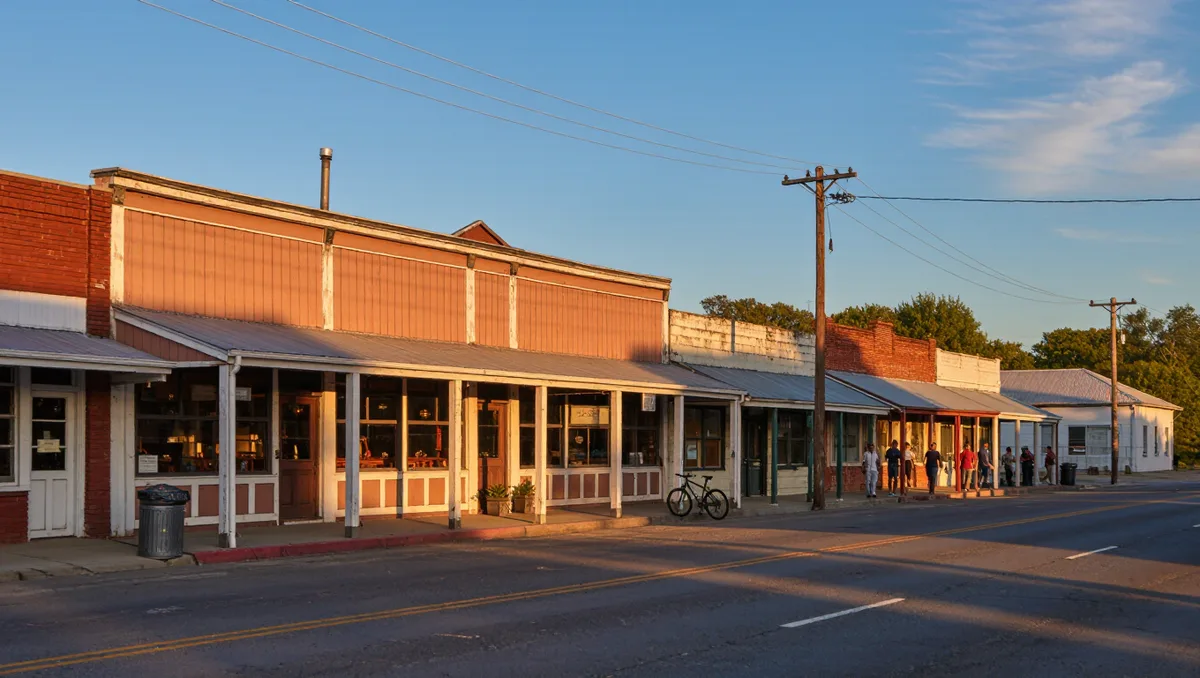
The frontier gave the insult a setting in which it read as plain truth. Few people lived there, and roads and institutions were thin. Families provided for themselves because no one else could. Working alone, the accepted account runs, trained people to favor individual habits over collective ones. Necessity felt like virtue. The frontier did not ask for converts. A survival rule hardened into a moral claim: a person who stands alone owes no one an invoice.
Why Does Herbert Hoover Own the Phrase?
The creed got its lasting name from Herbert Hoover. The term travels with laissez-faire politics. Yet the reference record credits Hoover himself with coining it. His circle kept the idea alive deep into the twentieth century. His interior secretary, Ray Lyman Wilbur, also a longtime Stanford president, mocked any promise of guaranteed economic security. Tame animals get that kind of safety, he noted, and it ends at a fence or a butcher's block. rugged individualism named a real ethic in reply: self-reliance first, and deep suspicion of help that arrives with a bill.
What Did Critics Say the Creed Costs?
Martin Luther King Jr. gave the critique its sharpest line. Speaking at Hunter College on March 10, 1968, in a version of his speech The Other America, he charged that the country had built "socialism for the rich, rugged individualism for the poor." Academics interviewed for the 2020 book Rugged Individualism and the Misunderstanding of American Inequality, co-written by Noam Chomsky, largely described a mechanism, not a slogan. People who hold the creed read poverty as personal failure. The poor, in that picture, cause their own troubles. They then favor stricter rules for aid. A 2021 research article added a pandemic footnote: the same belief slowed social distancing and mask use. We covered a connected angle in American Dream Myth: The Myth of the Self-Made American.
Why Does the Creed Still Hold?
Surveys keep finding the belief in place. Pew Research's 2016 poll put 57 percent of Americans against the idea that outside forces set their success. It also found 58 percent favoring a government that stays out of the way. Researchers have tied the creed to the map. Regions that stayed frontier longer were found likelier to back candidates who resist regulation. Critics see a contradiction there. Believers see independence. The numbers suggest the idea still pays its rent.
Conclusion: A Word That Keeps Changing Sides
The real story of American individualism is a string of reversals. An insult became an ideal. A survival habit became a moral creed. A president's coinage became a national brand that critics still quote back at the country. The word has absorbed every attack so far. That staying power may be the most individual thing about it.