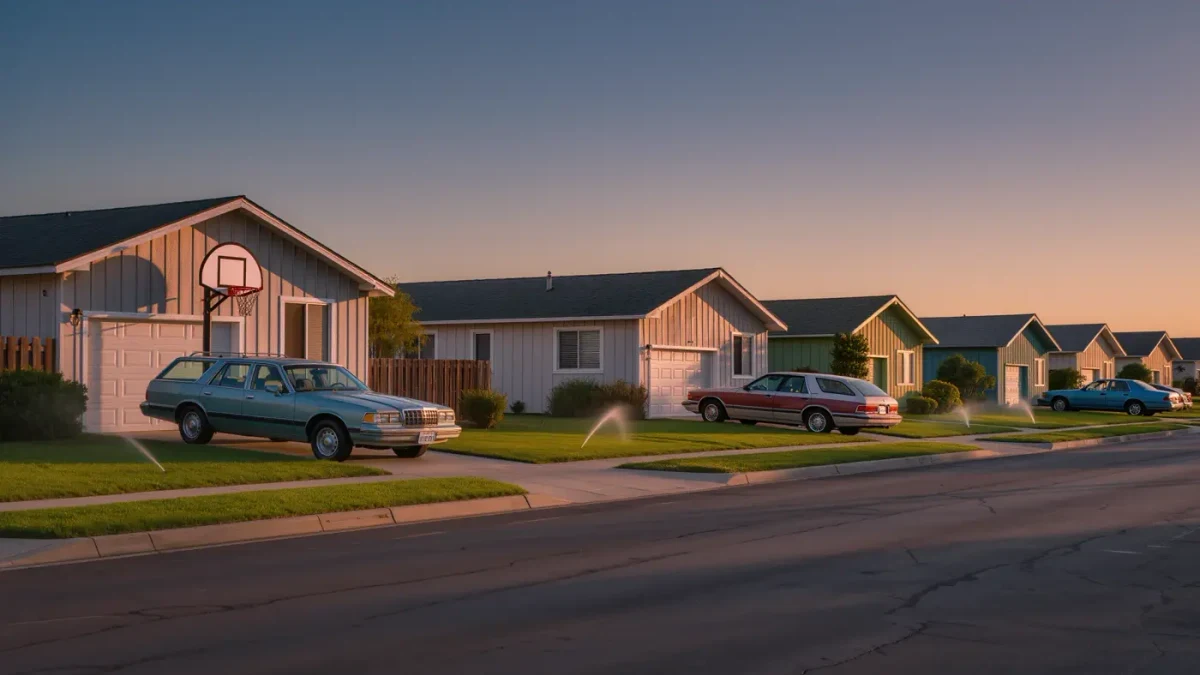
Levittown opened on Long Island in 1947 with mass-produced houses and, implicitly, a new design for free time: the private yard, the family car, and the scheduled child. Within a generation the enclosed shopping mall, the youth sports league, and the backyard barbecue had replaced the street, the saloon, and the unmortgaged afternoon. American leisure was not merely moved to the suburbs; it was rebuilt around them, and the bill for the renovation is still arriving.
What did leisure look like before the suburbs?
For the urban majority of the late nineteenth and early twentieth centuries, leisure was public, dense, and often commercial. Working-class Americans filled nickelodeons, dance halls, saloons, amusement parks like Coney Island, and baseball grounds; the wealthy had their clubs, but the distinctive American contribution was mass urban entertainment. Sociologists of the Chicago School, studying city neighborhoods in the 1920s, documented leisure that happened on stoops, streets, and corner taverns because apartments were too small for anything else.
The New Deal and World War II compressed this culture, and the postwar building boom ended its dominance. Federal mortgage insurance through the VA and FHA programs, opened to returning veterans in 1944, financed the migration of tens of millions to new subdivisions where the dwelling unit came with land — and land, in the American imagination, meant privacy. The porch moved to the back. The door got a lock. Leisure became something a family owned rather than a street it belonged to.
Why did the mall become the new town square?
Because the suburb had nowhere else to put one. Victor Gruen, an Austrian-born architect who wanted to recreate the social density of European streets in car country, designed Southdale Center in Edina, Minnesota, which opened in 1956 as the first fully enclosed, climate-controlled shopping mall in America. Gruen imagined civic theaters and art inside; what he got was retail, but retail that functioned as public space — walkable, safe, climate-controlled, and free of weather and, in practice, of anyone who looked out of place.
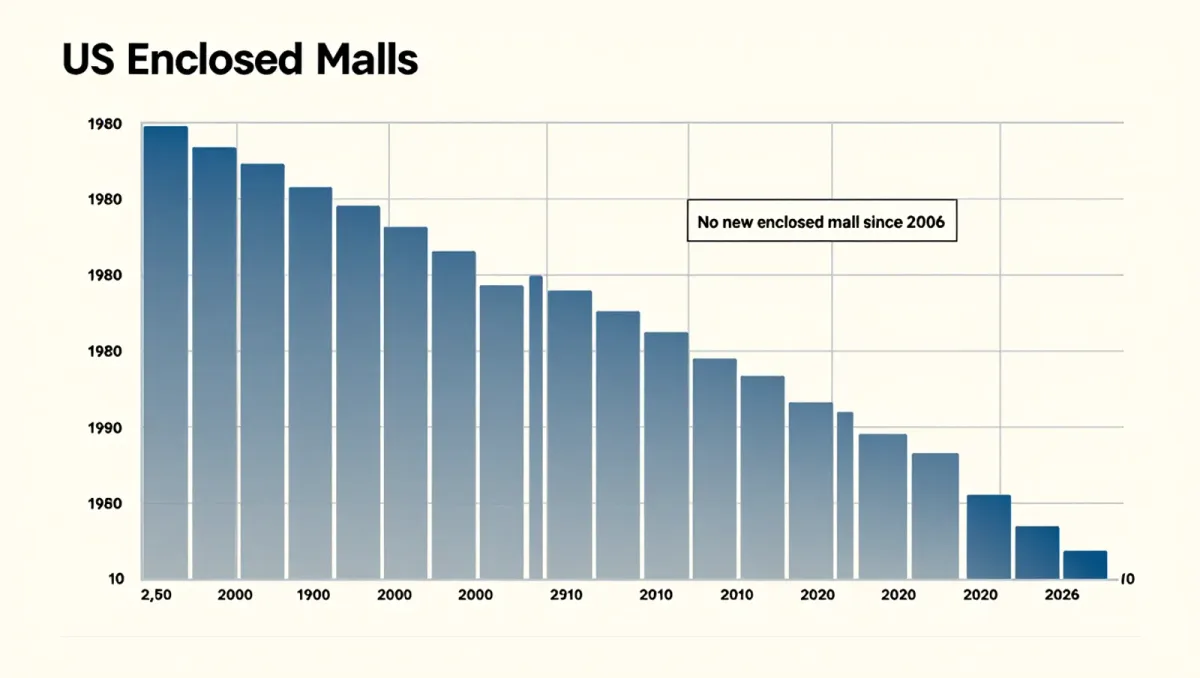
The format conquered the country. By the 1980s America had well over a thousand enclosed malls, and the mall did the cultural work of the vanished downtown: teenagers orbited it, retirees walked it in the morning, and whole films, from Fast Times at Ridgemont High (1982) to Mallrats (1995), treated it as the natural habitat of American adolescence. Its decline, which accelerated after the 2008 recession and continues in the retail apocalypse era, has left a strange archaeology of dead malls being rebuilt as distribution centers, offices, and in a few cities, housing — the loop from public square to private logistics closing neatly.
How did childhood become a schedule?
Through the lawn. Suburban yards were marketed in the 1950s as safe play spaces, but the deeper shift was organizational: children's leisure moved from sandlots to leagues. Little League Baseball, founded in Williamsport, Pennsylvania in 1939 with three teams, rode the suburban boom to thousands of leagues and an international World Series televised from Lamade Stadium. Soccer, hockey, and basketball followed, and by the 1990s the travel team — a tournament economy requiring hotel weekends and private coaching — had turned a childhood athletic career into a five-figure line item.
Sociologists including Annette Lareau, in research published in 2003, named the parenting style behind this 'concerted cultivation': the organized enrichment of middle-class childhood, in which leisure is deliberately structured to build skills and credentials. The suburbs supplied both the safety that made free play feel unnecessary and the car-and-calendar infrastructure that made scheduling possible. The result, visible at any suburban field on a Saturday morning, is a form of leisure that is also labor — for the children, and mostly for the parents driving the minivan shift.
What did the backyard do to hospitality?
It privatized it. The barbecue grill, the patio, and the above-ground pool turned entertaining inward, from the corner bar to the invited guest list. Sales of outdoor grills and patio furniture boomed with the subdivisions, and the pool-building wave — roughly keyed to postwar affluence and accelerated by polio scares that made public pools feel risky in the early 1950s — put water behind fences. Hospitality did not die; it narrowed to people one already knew.
Robert Putnam's Bowling Alone (2000) assembled the evidence that this narrowing had civic costs: membership in clubs, leagues, and unions fell across decades while private consumption of leisure — television above all — rose. The television deserves its own line in the ledger. Installed in nearly ninety percent of American homes by 1960, it made the suburban living room self-sufficient and quietly deleted the evening that had previously gone to the lodge, the cinema twice a week, or the neighbors.
What about the drive-in and the highway?
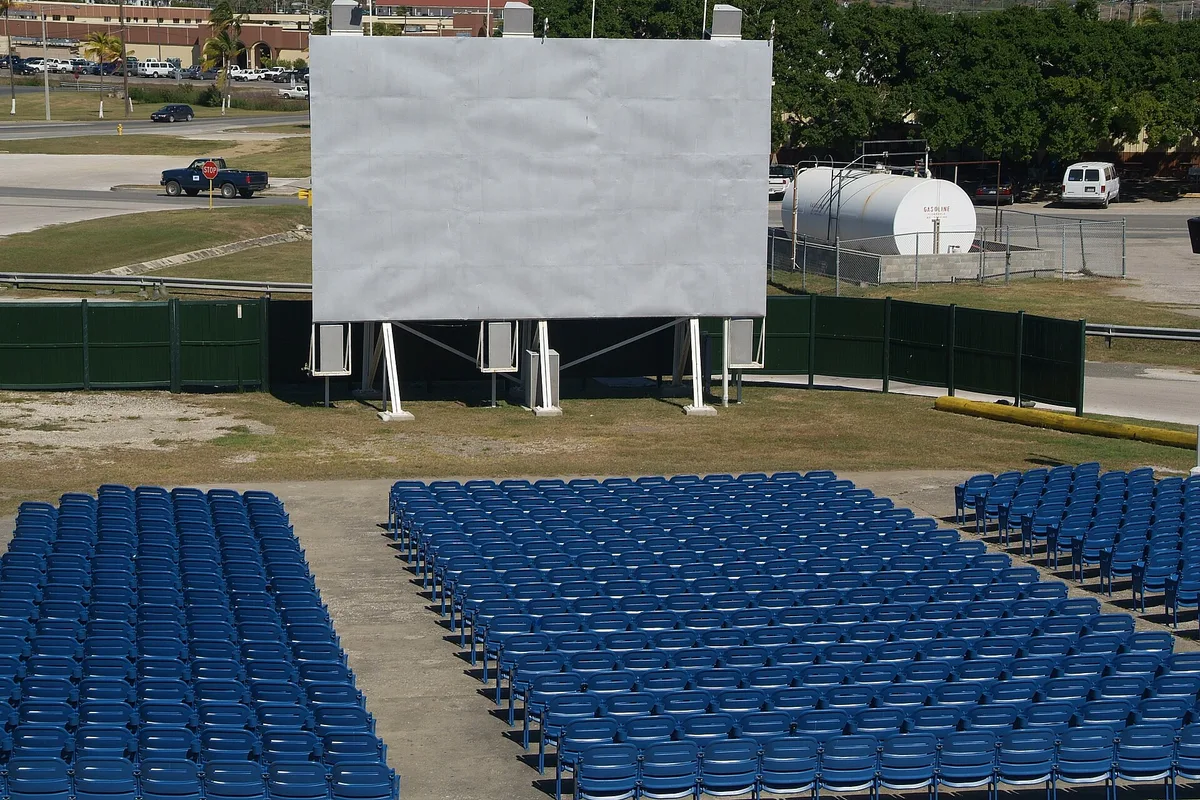
The car was the quiet co-author of every suburban leisure form. The Interstate Highway System, begun in 1956 under Eisenhower, made the road trip a national ritual and strung the countryside with the roadside economy — motels, diners, miniature golf, and the drive-in theater, invented in Camden, New Jersey in 1933 and numbering over four thousand by the late 1950s. The drive-in was the perfect suburban compromise: a public entertainment consumed in complete privacy, a cinema experienced as an extension of the driveway.
The roadside and the mall divided the twentieth century's leisure geography between them. The strip took what was fast and cheap — fast food franchises spread along the highway exits after McDonald's franchising took off in the 1950s — while the mall took what was social and slow. Both were designed around the parking space rather than the person, and both declined together when the commute patterns and retail economics that fed them changed. The drive-in, nearly extinct by the 1990s, survived as nostalgia and experienced a brief pandemic revival precisely because it had always been the most socially distant entertainment America ever built.
The design professions noticed before the residents did. Community planners spent the 1990s and 2000s cataloguing what the first-generation suburb had optimized away: the chance encounter, the walkable errand, the corner where teenagers could be teenagers under mild adult supervision. New Urbanism, the design movement behind Florida's Seaside (founded 1981), proposed porches, narrow streets, and mixed uses — essentially a costume drama of small-town America performed at suburban densities. Its critics found it precious, and its darling developments expensive, but its vocabulary won: nearly every large development built in the United States since 2010 advertises walkability, whether or not the grocery store is actually within walking distance.
Are the suburbs still shaping leisure today?
Yes, but the direction has reversed; the newest suburban leisure is an attempt to undo the old. Urbanist critics from Jane Hanauer's contemporaries onward — above all Jane Jacobs, whose 1961 The Death and Life of Great American Cities attacked the planning logic behind the suburbs — are now cited by developers building walkable mixed-use town centers on the sites of dead malls. Streets with fake main streets, porches mandated by design codes, food halls substituting for the department store anchor: the industry is selling, at a premium, the public leisure its earlier product abolished.
The pandemic accelerated the correction in contradictory ways. Locked-down suburbs rediscovered the yard, the home theater, and the bread oven, while remote work loosened the commute that had structured the suburban day since 1950. Meanwhile the youth sports economy kept inflating even as commentators rediscovered the unstructured play of the sandlot era, generally while driving a ten-year-old to a tournament in another state. The suburbs redesigned American leisure twice: first around the private property, and now, cautiously, around the missing public square. Whether the second renovation takes is the leisure question of the next thirty years — asked, most likely, from a patio chair within sight of a grill.