The frontier haunts American storytelling because it closed. In 1890, the Census Bureau announced that the country no longer had a settled frontier line — the map was, in that official sense, full. Almost immediately, the story of open land, self-invented people, and renewal through westward movement stopped being a report on the present and became a myth about the past. And myths, unlike frontiers, do not close. They get retold.
That is the strange engine at the center of the frontier myth in American culture: the stories Americans tell most often about themselves are set in a place and time that had just officially ended. The cowboy, the outlaw, the homesteader, the lone rider — these figures were codified precisely when the conditions that produced them disappeared. A myth is easiest to build from something you have just lost.
There is even a small linguistic clue hiding in the question itself. Merriam-Webster defines "why" as a noun as well as a word — the cause, reason, or purpose behind something. The frontier myth endures because it supplies a purpose. It tells Americans who they are supposed to be: independent, restless, capable of starting over. Whether that self-portrait was ever accurate is almost beside the point. It is useful, and useful stories get renewed.
What was the frontier, and what exactly closed in 1890?
The frontier, in the official sense, was a line on the census map: the moving edge of settlement beyond which population grew too thin to count as settled country. For most of the nineteenth century, that line kept moving west. Then it stopped. When the Census Bureau reported in 1890 that no single frontier line could any longer be drawn across the map, it was making an administrative observation. Culturally, it landed like an obituary.
Historians noticed the mood. A few years later, the historian Frederick Jackson Turner turned that census observation into the most famous argument in American historiography — the claim that the frontier experience, more than European inheritance, shaped American character: its individualism, its distrust of hierarchy, its appetite for reinvention. Whether or not you accept Turner's thesis, its influence is hard to overstate. It gave the closing of the frontier a meaning, and meaning is raw material for stories.
The point worth holding onto is this: the frontier myth was never really about the West as it was. It was about what Americans wanted to believe the West had done to them.
How did the frontier move from fact to entertainment?
Almost as soon as the real frontier closed, its entertainment version opened. Wild West shows toured the country and the world, staging battles and buffalo hunts for audiences who would never see either. Dime novels had already turned scouts and gunfighters into recurring characters with the narrative durability of superheroes. The frontier became a genre while the memory was still fresh — which is exactly why it worked. Nostalgia needs a deadline.
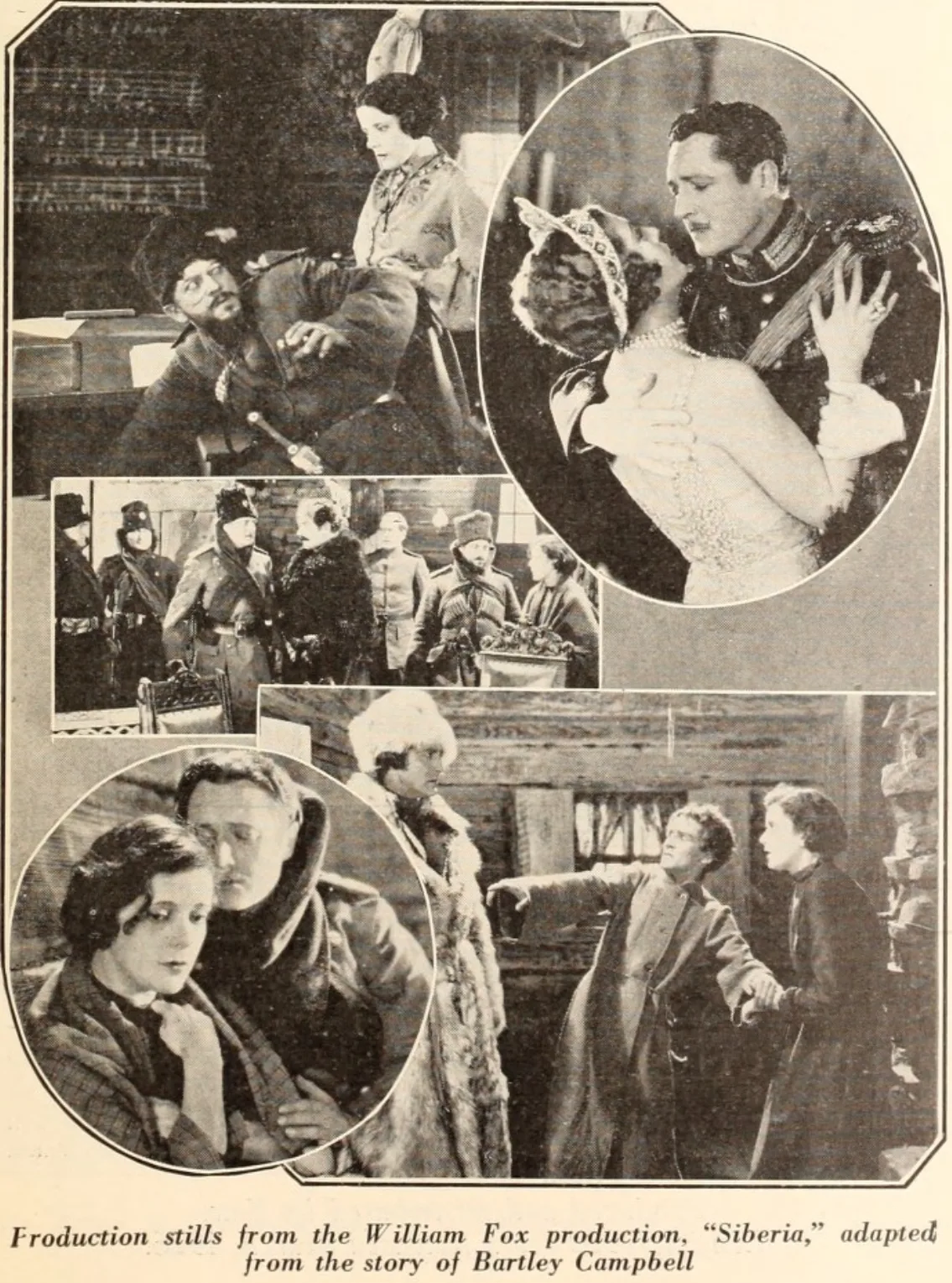
Then the movies arrived, and the Western became the first great American film genre. This was not an accident of subject matter. Early cinema loved the Western because it was visually simple and morally legible: open landscapes, clear conflicts, a hero who acts. The genre also solved a practical problem for a young industry. It offered an authentically American story at a moment when American film was trying to prove it did not need European subjects.
The movie palace era carried that story into the centers of cities. The same downtown theaters that dressed up moviegoing as an occasion — the subject of our piece on America's Grand Movie Palaces, and What Happened to Them — screened Westerns for urban audiences who had never touched a saddle. The frontier was, from very early on, something most Americans consumed rather than lived.
Why does the myth keep changing shape?
A myth that survives a century does so by bending. The frontier story has been revised with nearly every cultural shift, and each revision tells you more about the decade that made it than about the 1880s it depicts.
Midcentury Hollywood favored the big, moral Western: the community that must be built, the gunfighter who must hang up his guns or use them one last time. The Vietnam era produced revisionist Westerns in which the cavalry looks less like salvation and more like occupation. Later still came the anti-Western and the neo-Western, which relocated the frontier's logic — violence on the edge of order, a man with a code, a landscape that does not care — to border towns, drug country, and post-industrial wasteland. The horses change. The grammar holds.
Television ran the same cycle in long form, from the family-friendly ranch sagas of the network era to the prestige dramas that treat the West as a crime scene. Even science fiction keeps borrowing the template: the space western is one of the most reliable hybrids in film and television, a frontier with airlocks. The setting updates. The question underneath does not: what happens to a person when the rules run out?
What does the myth get wrong — and why does that matter?
The honest answer, and the reason the myth stays contested, is that it leaves most people out. The frontier myth centers the individual arrival; it underplays the communities that already existed on the land, the Indigenous nations whose dispossession made westward expansion possible, the immigrant labor that built the railroads, and the women who ran the homesteads the ballads rarely mention. For decades, popular Westerns flattened all of that into scenery.
That flattening is not a small flaw. Myths do work in the world. A national story about empty land and self-made men has been used, historically, to justify policy and to shape who feels entitled to belong. This is where the culture-first version of the argument matters: the Western is not merely entertainment with a political shadow. It is one of the stories through which Americans have negotiated belonging — who counts as a founder, who counts as an outsider, and whether the past can be redeemed by retelling it.
The strongest defense of the myth is also worth stating fairly. Its defenders argue that the frontier story, at its best, is not about conquest but about reinvention — the idea that a person is not permanently defined by where they started. That reading has real cultural power, and it has animated everything from immigrant narratives to small-town revival movements. The disagreement, then, is not between people who like stories and people who do not. It is between two readings of the same story, and both readings keep getting made.
Why the myth outlived its moment — our analysis
Our analysis is this: the frontier myth survives because it is less a story about a place than a story about a feeling — the belief that somewhere out there, a person can start over. Places close. Feelings recur. Every generation that senses its own world closing — the small town hollowing out, the industry leaving, the map feeling full again — reaches for a story in which the map was open.
That is why the myth keeps migrating. It shows up in the photographer's West of the 1930s, when the government sent documentarians to picture a rural America under strain — work examined in our piece on The FSA Photographers Who Defined America. It shows up in the drive-in, where the Western and its cousins played to car-bound audiences at the edge of town — a story we told in How Drive-In Theaters Conquered America and Vanished. It even shows up in the world's fairs, which kept promising Americans a technological frontier to replace the geographical one, as in The World's Fairs That Redrew the American Imagination.
The frontier closed in 1890. The need it served did not. As long as Americans keep believing that reinvention is possible — and most of them, most of the time, do — the stories will keep coming: the rider on the ridge, the stranger in town, the small craft pushing past the edge of the map. The myth is not a memory of the frontier. It is a standing argument that the frontier was never really a place at all. It was a promise, and promises do not expire with the census.