In 1935, the Resettlement Administration hired economist Roy Stryker to run a small photographic unit documenting rural poverty; the unit passed to the Farm Security Administration in 1937 and, over eight years, produced roughly 250,000 images. The roster at various times included Dorothea Lange, Walker Evans, Gordon Parks, Ben Shahn, Arthur Rothstein, Russell Lee, Marion Post Wolcott, and Jack Delano, and their work, now held by the Library of Congress, fixed the visual terms in which the Great Depression is still imagined.
Why did a farm agency need photographers?
Politics, as usual. Rexford Tugwell, the Resettlement Administration's director, needed to persuade Congress and urban newspaper readers that his agency's loans, resettlement projects, and camp construction for migrant farm workers were necessary, and Stryker, his former student at Columbia, argued that pictures could do the persuading. The Historical Section's official job was to supply images to newspapers and magazines free of charge, and its output functioned as a public relations operation for relief. That the operation also produced the era's defining art was a side effect, though hardly an accidental one: Stryker chose photographers with strong styles and mostly left them alone in the field.
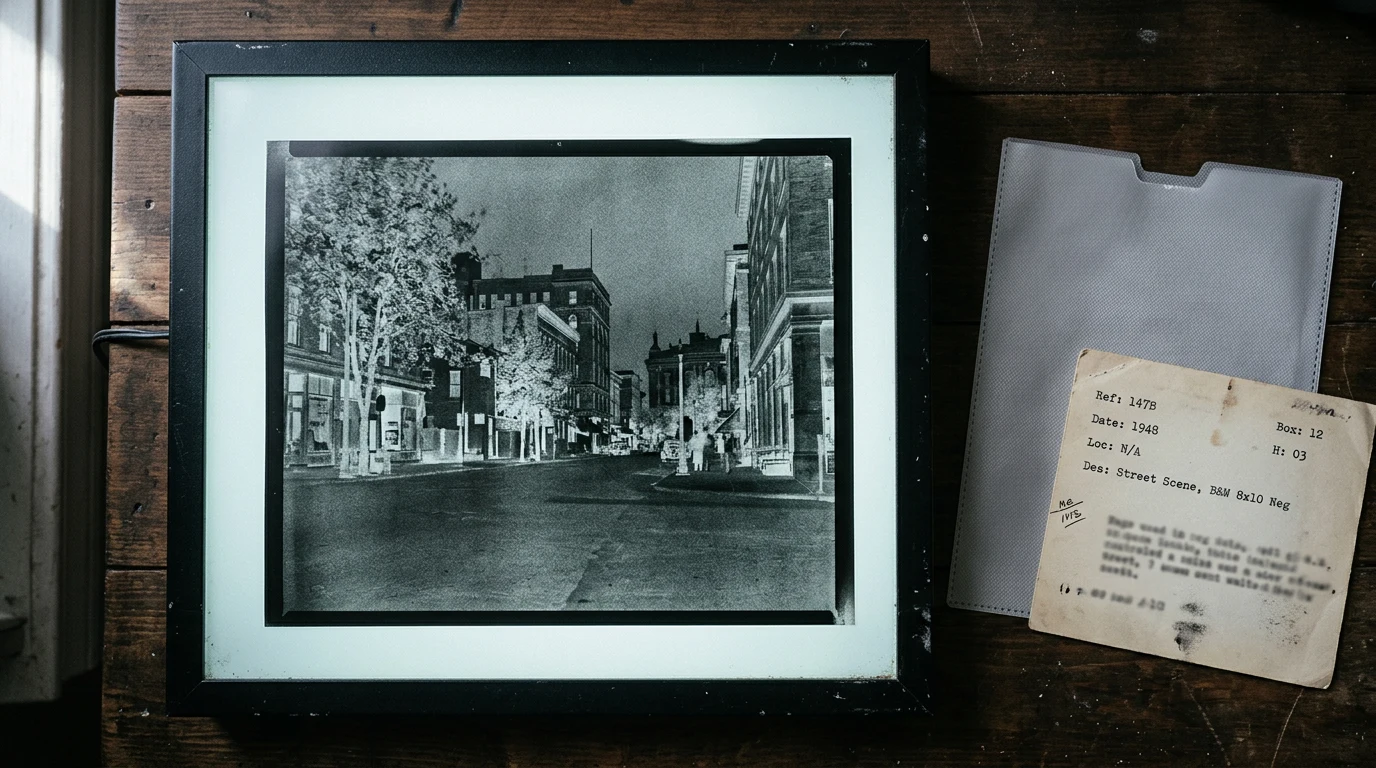
Stryker's method mixed freedom and control. He issued shooting scripts, long lists of subjects from church suppers to tractor repairs to the faces of tenant farmers, and photographers used them as prompts rather than orders. He edited ruthlessly at home, at one point punching rejected negatives with a hole punch, a habit conservators now curse, and he argued with his bosses when they objected to pictures that made American poverty look unflattering. The unit survived name changes and reorganization, becoming part of the FSA in 1937 and being folded into the Office of War Information in 1942, when its assignment shifted from rural poverty to wartime mobilization.
What made these particular pictures different?
Time and trust. FSA photographers worked assignments for weeks, returned, and went back out, an economic luxury unknown to newspaper staffers, and they photographed poor Americans as individuals rather than types. Lange's Migrant Mother, shot at a pea pickers' camp in Nipomo, California, in March 1936, became the era's single most reproduced image precisely because Florence Owens Thompson's face does what statistics cannot. Evans spent the summer of 1936 with writer James Agee among Alabama tenant farm families; the resulting book, Let Us Now Praise Famous Men, published in 1941 to popular indifference and later canonized, set the standard for looking at poor lives without condescension or costume.
The unit also functioned as an accidental school for American documentary photography. Gordon Parks arrived in 1942 on a fellowship and shot his American Gothic, a Black cleaning woman standing with mop and broom before an American flag, in the FSA's Washington offices. Marion Post Wolcott documented southern tobacco and carnival life in color as early as 1939, using early Kodachrome stock; Russell Lee covered the Spanish-speaking towns of New Mexico and, later, the internment of Japanese Americans; Arthur Rothstein made the Dust Bowl legible with a series that included a skull in a cracked field. Walker Evans formalized storefronts and bedrooms into an American grammar of the plain. Collectively they built a style, frontal, patient, and unsentimental, that every documentary photographer since has either worked in or against.
How were the pictures used at the time?
In the press, immediately and without fees. Stryker's office circulated prints and captions to newspapers, magazines, and book publishers, and the images appeared everywhere from Life to propaganda pamphlets, an early experiment in what would now be called open-access distribution. Lange's photographs of California migrants helped build public support for the FSA's camp program, which gave migrant families sanitation and safe housing and appeared in Steinbeck's background research for The Grapes of Wrath, published in 1939. The pictures were propaganda in the neutral sense: they were made to produce political effects, and they did.
The captions could do damage. Migrant Mother's subject, Florence Owens Thompson, was later identified as a Cherokee-descended woman who said she had not known the photograph would be distributed everywhere and never received royalties; other subjects found themselves famous for poverty they had not chosen to advertise. Historians have also noted what the unit under-photographed: the unit largely avoided direct images of racial violence and labor conflict that would have jeopardized the agency's congressional support, and its portraits of dignified suffering coexisted with deliberate silence on certain subjects. Reading the archive now requires reading its omissions.
How did the photographers actually work on the road?
Slowly, and mostly alone. The standard pattern was an assignment letter, a car or bus ticket, film allotment, and weeks in the field, with the photographer choosing counties, stopping where a scene suggested itself, and often talking before shooting. Lange worked with a Graflex series camera on a tripod, one negative at a time, and shot few frames by later standards; Evans hauled a large view camera and made fewer than a dozen exposures of a subject. Film went back to Washington by mail, where Stryker's staff developed, printed, captioned from the photographer's notes, and filed it by subject for distribution.
The captions were a shared production, and their evolution is its own historiography. Early FSA captions could be vague or, worse, wrong; later ones carried detail down to the town, crop, and wage, because Stryker understood that the pictures' authority in print depended on the small type beneath them. Photographers carried notebooks as diligently as cameras, and the surviving notes, also archived at the Library of Congress, sometimes undercut the legend of the pure artist in the field with the reality of the methodical civil servant.
Where did the archive end up?
The Library of Congress, mostly between 1942 and 1946, when the OWI files were transferred and consolidated. The collection, around 250,000 negatives and slides, became one of the most consulted holdings in Washington, and its digitization has made it one of the largest bodies of historical photography freely available anywhere. Stryker left government in 1943 for a parallel project at the Standard Oil Company of New Jersey, where he hired several FSA alumni to document the oil industry, a fact usually cited as evidence that his methods worked for any client who wanted a humanized record.
The postwar careers scattered. Lange went on to a Life assignment and a 1966 retrospective at the Museum of Modern Art, the year she died; Evans to MoMA's staff, where he shaped another generation as its photography curator; Parks to Life, where he spent two decades as one of its leading photographers and filmmakers. The FSA archive itself kept generating effects: it supplied the reference images for later films about the Depression, anchored decades of museum exhibitions, and, in an irony Stryker might have enjoyed, became the stock library from which advertisers and designers still borrow the weathered face of the American past.
Can you see the photographs today?
Yes, freely. The Library of Congress's FSA-OWI collection is digitized and searchable online, with prints available for study in Washington, and major monographs on Lange, Evans, Parks, and the unit as a whole remain in print. A handful of the sites the photographers documented, from the FSA migrant camp at Arvin, California, to the Alabama county Agee and Evans described, are marked or recognizable today, and standing in them with a laptop's worth of the archive open is one of the stranger experiences American cultural history offers.