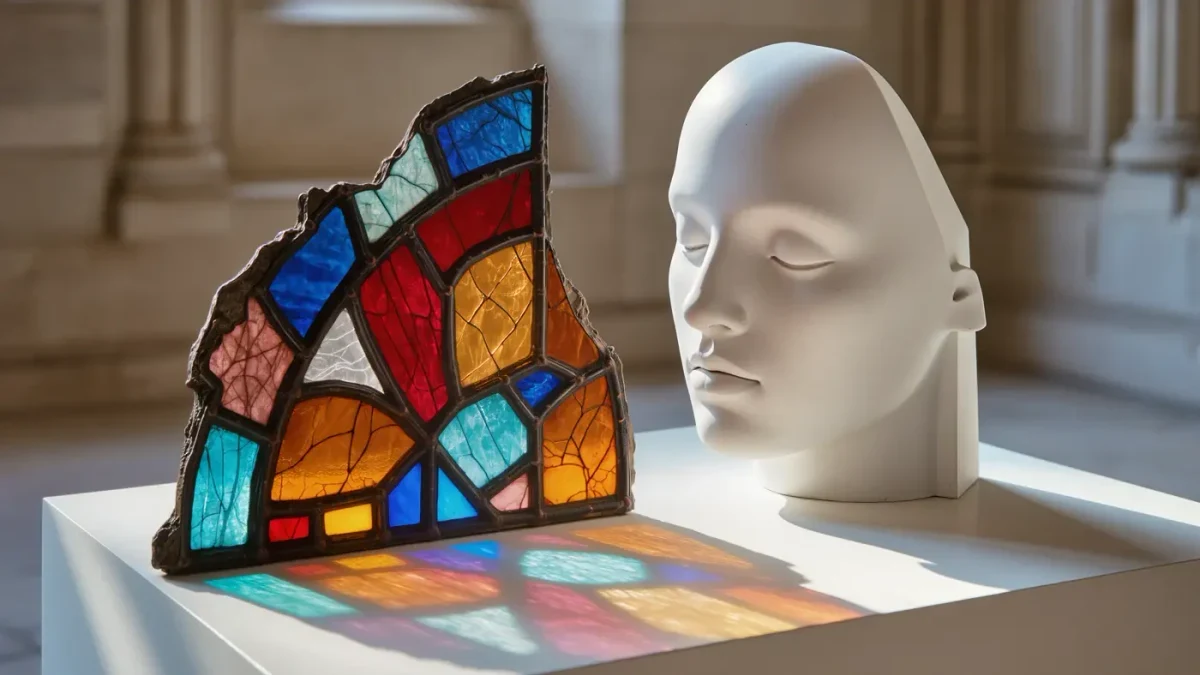
America has far more churches than churchgoers. Researchers at the American Religious Data Survey and affiliated projects have documented thousands of houses of worship closing or merging each year, leaving behind a built inventory of steeples, vaulted naves, and stained glass in search of tenants. The most natural tenant, it turns out, is art. From converted sanctuaries running contemporary galleries to deconsecrated cathedrals hosting installations, the church-becoming-art-space is now a reliable genre of American adaptive reuse — and a revealing one.
Why do churches convert so well into galleries?
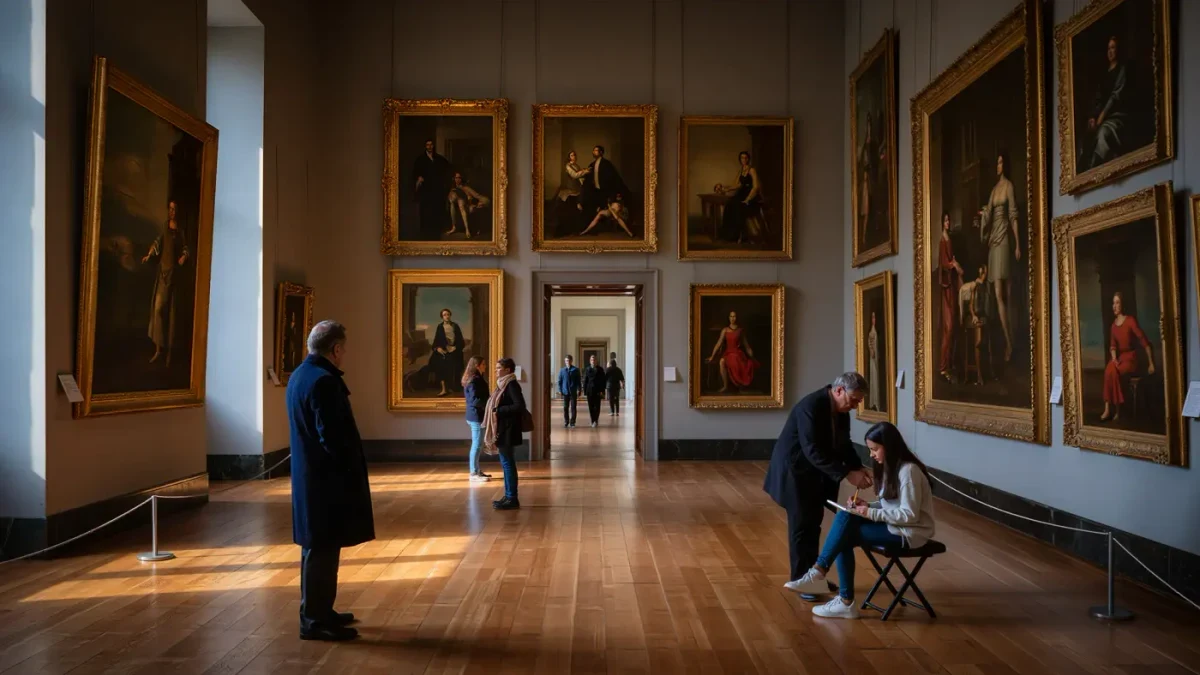
Because the building types already share a program. Churches were designed for a crowd facing one direction, with controlled light, high ceilings, generous spans, and an emphasis on processional movement from a dim entrance to a luminous focal point. Substitute an artwork for the altar and the visitor's experience barely changes: awe on approach, silence inside, neck craned upward. Gallery lighting designers speak of church windows the way painters speak of good north light — an existing condition to work with rather than against. Acoustics, the hardest thing to retrofit into any building, come free in a nave built for unamplified voices.
What kinds of art spaces move in?
The range runs from commercial to utopian. Some conversions are straightforward commercial galleries renting sanctuaries whose scale flatters large painting and sculpture. Others are artist studios and live-work spaces — a congregation-sized floor plate subdivides neatly into studios with tall windows. Performance companies prize former churches for the same reason they prize warehouses: volume. And a distinct American subcategory is the standalone contemporary art institution built inside a decommissioned church, where the religious architecture becomes part of the work's frame — an untitled nave can make even a modest installation feel liturgical.
Who pays for the conversions?
Conversion money comes from the same tools that fund all American historic reuse. The federal Historic Rehabilitation Tax Credit, administered by the National Park Service with the IRS, has financed thousands of income-producing rehabilitations of historic buildings, churches included, and many states layer their own credits on top. Developers, arts nonprofits, and occasionally the departing congregations themselves structure deals in which the building's landmark status buys the project a financing partner. Where no deal can be struck, the alternative is usually not a different use but no use — and then demolition, which for a neighborhood landmark is its own small bereavement.
What is lost in the conversion?
More than square footage. Religious buildings carry congregational memory — baptisms, funerals, weddings spanning generations — and reuse that treats the building as a beautiful shell can flatten that history into decor. Good projects keep the traces: the cornerstone, the memorial windows, the names in the vestibule. There is also a fair critique that art-space conversion is gentrification wearing incense: a neighborhood loses its church and gains an amenity priced for newcomers. The congregation that dispersed does not usually get tickets to the opening.
Practical losses are real too. Stained glass and pipe organs are expensive to maintain and awkward to repurpose; pews flood the secondhand market; and historic-district review can slow every change a gallery actually needs, from climate control to loading access. Church-to-gallery conversions succeed when the building's quirks are treated as content, not obstacles.
Why does America keep its empty churches at all?
Part sentiment, part economics, part law. Demolishing a masonry landmark costs money and often requires permissions that neighbors will fight. Church buildings anchor street corners and collective memory in a way few commercial structures do, and their conversion is usually cheaper — and always faster — than building equivalent volume new. The result is a specifically American settlement: the market does the adapting, the National Register supplies the incentives, and the culture supplies the tenants. Art, which needs exactly what religion stopped needing — big rooms, patient audiences, and light — is the tenant the buildings were apparently waiting for.
How is a conversion done responsibly?
Preservation practice has converged on a short list of principles. Document the building before touching it — photographs, drawings, a historic structure report. Retain the fabric that carries memory: cornerstones, memorial windows, signage, and the interior volumes that define the building's character. Engage the former congregation and the neighborhood early, since they are the building's real stakeholders and often its best historians. And design the new use around the architecture rather than against it, accepting that a nave will always read as a nave. Projects that follow these steps tend to earn local goodwill; those that treat the sanctuary as a shell tend to relitigate the conversion for years.
What kinds of performance thrive in church buildings?
Chamber music above all, followed by choir, early music, and theater-in-the-round — forms that want intimacy, reverberation, and height. Deconsecrated churches host music series and fringe theater companies across the country, often with rental income that sustains the building between exhibitions. The acoustic that made the space good for hymns makes it good for strings, and audiences report an atmosphere commercial venues work hard to fake: the sense that whatever happens here matters.