On December 25, 1937, Arturo Toscanini conducted his first broadcast with the newly created NBC Symphony Orchestra, a 100-piece ensemble the network had built specifically to lure him out of retirement. For the next seventeen seasons, weekly symphony broadcasts drew millions of American listeners, and NBC was only the grandest case: through the 1930s and 1940s, each major network and hundreds of local stations kept orchestras, big bands, and studio ensembles on weekly payroll. By the mid-1950s, nearly all of it was gone.
Why did radio networks employ orchestras?
Because radio was live and needed music hourly. In the 1930s a station's day was a stage schedule: soap operas needed organists, variety shows needed bands, dance programs needed orchestras, and a network signature sound required a house ensemble. Recordings were considered filler, and the musicians' union, the American Federation of Musicians under James Caesar Petrillo, fought their broadcast use for decades, at one point banning union members from making records entirely between 1942 and 1944. The result was that if a program wanted music, it hired musicians, and by the late 1930s radio employed several thousand of them in New York, Chicago, and Hollywood alone.
Prestige operated alongside commerce. A network that carried Toscanini, or the Philadelphia Orchestra under Leopold Stokowski on Sunday afternoons, was performing a public service that regulators and advertisers both respected, an argument RCA used explicitly when it created the NBC Symphony in 1937. The orchestra recorded for RCA Victor, toured, and cost the network millions over its life, but it functioned as the corporate crown jewel: proof, broadcast into tens of millions of homes, that commercial radio could deliver the country's highest culture alongside its comedians.
Who were the listeners, and what did they hear?
Audiences were measured in the millions, and their listening was casual rather than ceremonial. The Bell Telephone Hour, launched in 1940, mixed light classics and pop vocals for a family audience; The Ford Sunday Evening Hour carried symphonic programs through the 1930s and 1940s with corporate sponsorship stated plainly; and the Toscanini broadcasts, Saturday evenings simulcast nationwide, drew audiences estimated in the millions for a program of Brahms and Beethoven with no laughs at all. Rural listeners, far from any concert hall, heard first-rank orchestras over battery sets, an experience many recalled decades later as the definition of luxury.
The big bands were the format's popular half. Benny Goodman's 1937-38 broadcasts from the Hotel Pennsylvania's Madhattan Room, Duke Ellington's network remotes from the Cotton Club years earlier, and countless one-night stands transmitted from ballrooms made band leaders national figures in a way records alone never had. Broadcasts were unscripted in a way later popular music was not: an arrangement failed, a soloist stretched, and the error went out over the coast-to-coast wire and vanished, which is why collectors still trade airchecks, recordings made off the air, as the only record of how these bands actually sounded on the stand.
How big was the musicians' payroll, really?
Big enough to be a civic institution. New York's network studios alone engaged hundreds of players on weekly contracts, and radio work became the steady income that let studio musicians live as musicians: a trumpeter might play a soap opera cue at ten, a Bell Telephone Hour rehearsal at two, and a band remote at eight, all within a few blocks. Hollywood, where the film studios and network West Coast operations overlapped, ran an even larger ecosystem of contracted players, and Chicago, the last network headquarters with a full music staff, kept its orchestras through the 1950s longer than either coast.
The union made this world and policed it. Petrillo's AFM, which ran radio's music policies with a mix of thuggish theater and genuine effectiveness, struck the transcription companies, pressured stations into carrying live programs, and in 1942 ordered members to stop making records until the companies paid into a union fund for unemployed musicians, a ban that lasted into 1944 for the majors and reshaped the era's surviving catalog. Advertisers grumbled, the Justice Department investigated, and the musicians kept their health plan. Whatever the era's economics looked like from outside, from inside a network studio in 1946 they looked like a permanent fact of the business.
What did the sponsors get for their money?
An association with civilization, sold by the single announcer's voice between movements. The Ford Sunday Evening Hour, the Bell Telephone Hour, the Voice of Firestone, which carried its own orchestra from 1928 well into the television age, and Longines Symphonette all fused a corporate name to a musical standard, on the theory that a family that trusted a brand with its Brahms would trust it with its car. The sponsorship model funded the orchestras directly, which meant the era's high culture ran on a commission structure set by the advertising department, an arrangement critics found vulgar and musicians found reliable.
The announcers became stars of a minor kind, and the broadcasts developed conventions television later inherited: the hushed station break, the sponsor's paragraph read over the cadence of a settling audience, the sign-off wishing the nation good night from a hotel ballroom in midtown. For listeners, sponsorship made the music feel like a public amenity delivered by private hands, an impression that persisted long after the hands withdrew and the recordings took over the airwaves.
What killed the radio orchestra?
Television, chiefly, with an assist from tape. After 1948, television absorbed the advertising budgets and the variety formats that had justified staff bands; video needed fewer musicians and the new medium favored faces over ensembles. Magnetic tape, commercialized in the late 1940s, made recorded music cheap and indistinguishable on air from live, undermining the last technical argument for daily orchestras. The AFM's leverage shrank accordingly, and by the early 1950s networks were cutting their music staffs in rounds. The NBC Symphony gave its last concert under Toscanini's name in April 1954; Toscanini retired that month after 17 seasons, and the orchestra reorganized itself as the Symphony of the Air, touring and recording without network subsidy until it dissolved in 1963.
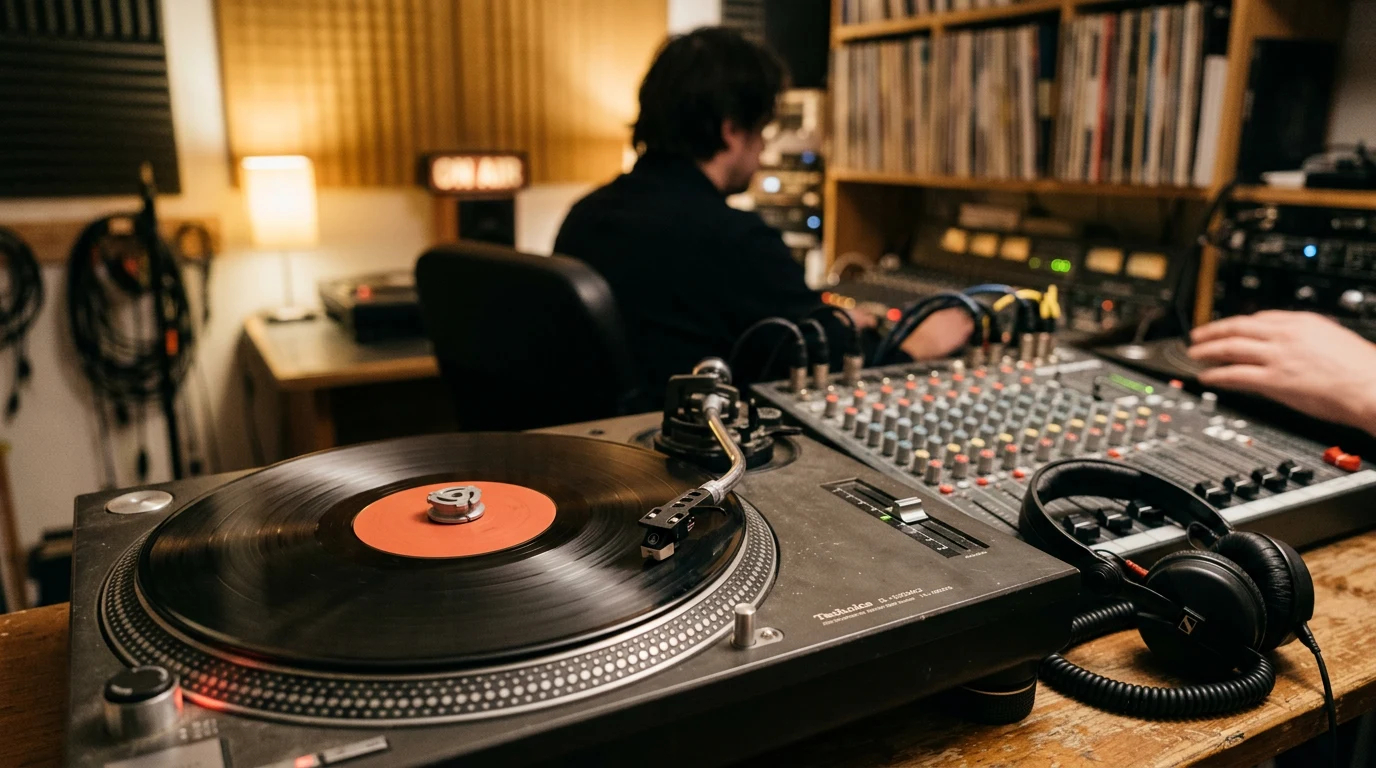
The pattern repeated down the scale. CBS's house orchestra and the studio bands of Hollywood radio wound down through the 1950s as radio itself became a record-jukebox format, with disc jockeys replacing ensembles and the union's recording bans reduced to historical footnotes. Local stations that had carried live noontime concerts from hotel lobbies switched to syndicated transcriptions. A few prestige institutions survived by migrating: the Boston Symphony's Saturday concerts, broadcast since 1926, simply moved to television and then back to radio, and continue in national syndication today.
Did any of it survive into the present?
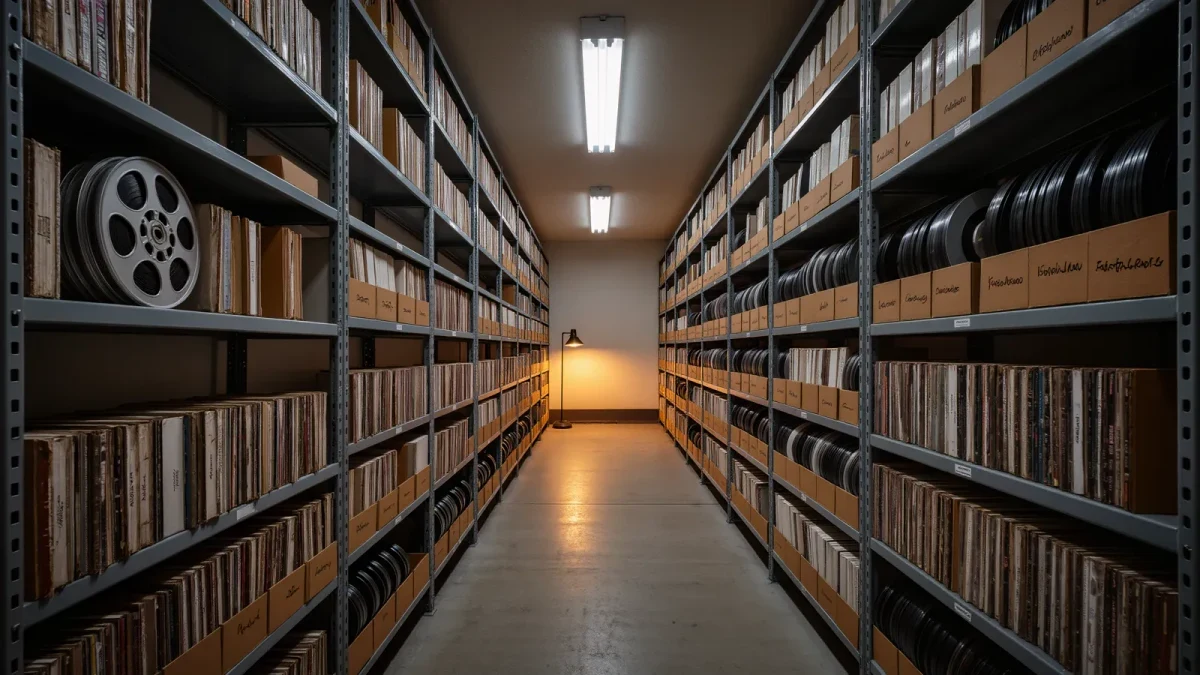
Yes, in three forms. Broadcast concert series: the Chicago Symphony's syndicated concerts, the Metropolitan Opera radio broadcasts, running weekly since 1931 and among the longest continuous programs in broadcasting history, and public radio's later performance feeds all descend directly from the network-orchestra tradition. Recordings: the NBC Symphony's RCA sessions under Toscanini remain catalog items, and the aircheck underground keeps the bands alive. And the musicians themselves, who scattered into Hollywood film scoring, the recording studios of the 1950s and 1960s, and the new orchestras of the postwar boom, carrying the radio era's sight-reading discipline into genres that never knew its name.
Why does this era feel so improbable now?
Because its economics inverted. The radio orchestras existed when music was expensive to transmit and attention was cheap to assemble: a network could afford a 100-piece payroll because the same broadcast reached a significant fraction of the country at once. Streaming reversed both terms, making transmission free and attention the scarce commodity. The result is that a 1945 household heard more live orchestral music by accident than a 2026 household encounters on purpose, a statistic that would have surprised neither Toscanini, who distrusted microphones, nor the advertisers, who trusted nothing else.