Etsy, the handmade-goods marketplace founded in 2005, counted more than 7 million active sellers by the mid-2020s, and the Craft Brewers Association reported over 9,000 craft breweries operating in the United States. Add makerspaces, farmers markets — counted in the thousands by the Department of Agriculture — and the artisan-everything economy, and maker culture is one of the largest voluntary reversals of industrial logic in American life: millions of people paying more for things made slower, by hand, nearby.
What is maker culture?
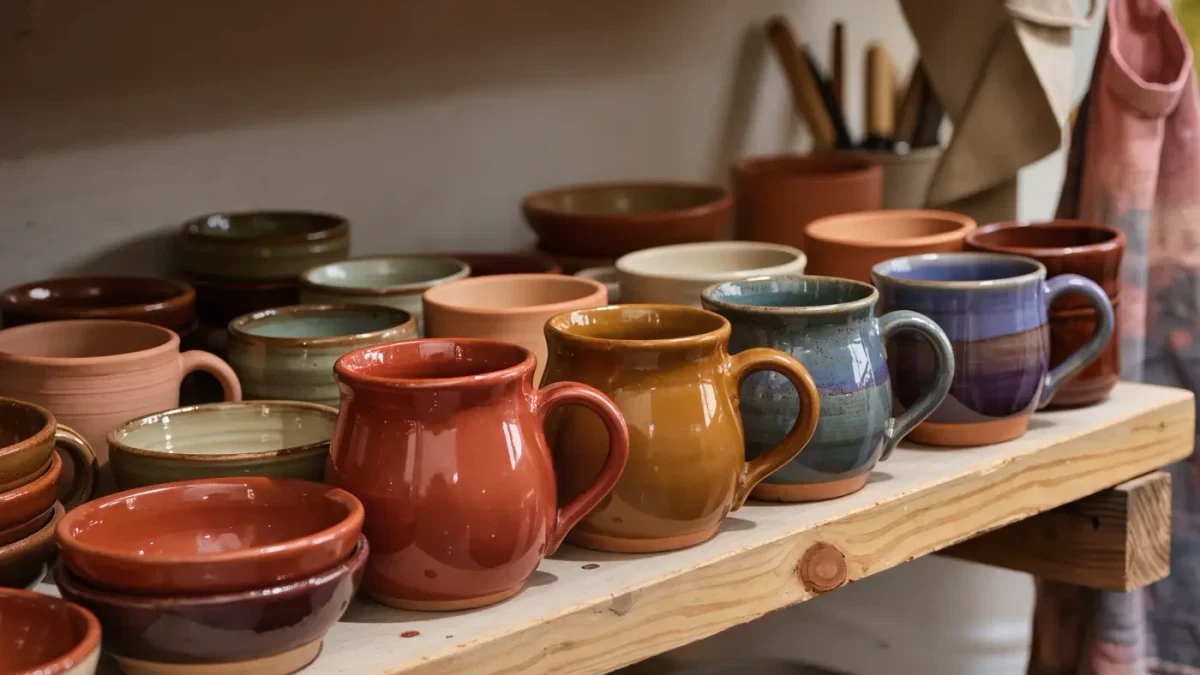
The umbrella covers two streams that merged around the 2000s. One is the crafts revival: woodworking, knitting, ceramics, letterpress, natural dyes. The other is the tech-DIY scene — hobby electronics, 3D printing, open-source hardware — whose bible, Make magazine, launched in 2005 and whose makerspace movement spread machine access through libraries and community workshops. The streams share a creed: the person who uses a thing should be able to make, modify or repair it. That creed is old — it is essentially the workshop ethic of pre-industrial America — but between 1950 and 2000 it survived mostly in basements and county fairs.
Why did it come back when it did?
Three enabling conditions arrived at once. The internet gave niche producers a market: a sell-side of one is viable when buyers are nationwide, as Etsy demonstrated. Digital fabrication dropped the capital cost of making — desktop 3D printers fell from tens of thousands of dollars in the early 2000s to a few hundred, and cheap laser cutters and CNC machines followed. And a cultural turn against mass production set in: the 2008 recession pushed both thrift and self-employment, while food scandals and fast-fashion critiques made provenance a value. The maker movement named something people already wanted.
Is making actually an economy or a costume?
The honest answer is: a thin economy wearing a thick costume. Most Etsy sellers are part-time; the platform's own disclosures have long shown the large majority run small side shops, not living-wage businesses. Craft brewing is the exception that proves the potential — an industry that went from a handful of breweries in the late 1970s to over 9,000 and a market share measured in tens of billions of dollars. The strongest version of the skeptic's case: maker culture aestheticizes scarcity the way gourmet culture aestheticizes expense, and its magazines sell a lifestyle its practitioners cannot cash. The strongest reply: every craft economy started as a hobby economy, and the skills shelf-life is long.
What did institutions do with it?
They absorbed it — some thoughtfully, some as decor. Public libraries, permanent institutions of democratic access, added makerspaces by the hundreds, with 3D printers and sewing machines next to the stacks; the Institute of Museum and Library Services funded early experiments. Schools adopted maker-spaces as STEM pedagogy. Corporations borrowed the word: every product launch now promises artisanal authenticity, from pickles to luxury SUVs, a dilution that makers themselves complain about. The label survived its absorption into advertising; the practice, less photogenic, kept growing underneath it.
Who actually makes?
A broader demographic than the stereotype suggests, though not by much. Studies of makerspace membership skew educated and male in the tech stream, older and overwhelmingly female in the craft stream — knitting and quilting remain among the most participatory crafts in America, with tens of millions of practitioners by industry counts. The racial and class critique lands harder: makerspaces cluster in affluent zip codes, and media coverage in the 2010s repeatedly discovered as innovation what immigrant and Black communities had done continuously as necessity — a critique several prominent maker advocates conceded.
Is the making era over?
The venture-backed version cooled: Make magazine's parent collapsed in 2016 before a revival, and the pandemic whiplashed handmade sellers from boom to shipping crisis. But the underlying curve — breweries, farmers markets, library makerspaces, the repair movement pushing right-to-repair laws through state legislatures into the mid-2020s — kept rising. America industrialized making out of daily life and missed it almost immediately; the arts-and-crafts reformers of the 1890s were already protesting the factory. The current version simply has better tools and a storefront in every pocket. The country did not fall out of love with making. It fell back in, again, with credit cards.
What did the pandemic do to making?
It supercharged it, then whiplashed it. Lockdowns turned sourdough, sewing machines and woodworking into mass hobbies; sewing-machine sales spiked so sharply in 2020 that dealers reported month-long waiting lists, and flour disappeared alongside yarn. Handmade marketplaces saw a wave of new sellers — and then a reckoning, as shipping costs, supply gaps and the return of office work thinned the ranks. What survived was the infrastructure: the co-working woodshops, the library makerspaces, the online tutorials that had taught a locked-down country to fix and make things. Necessity made makers; habit kept some of them.
What comes after the maker label?
Repair. The frontier of the movement is no longer making new things but keeping old ones — electronics repair cafés, tool libraries, and the right-to-repair campaigns that persuaded state legislatures from New York in 2022 onward to require manufacturers to sell parts and documentation to independent fixers. The Federal Trade Commission endorsed the principle in a 2021 report, and by the mid-2020s Apple and other holdouts had begun opening repair programs under pressure. Repair is maker culture with a moral edge: less about identity, more about waste. It is also the closest the movement has come to its original, slightly Puritan point — that a person who can maintain a thing is never entirely at the market's mercy.
Is making good for you, or just expensive?
Psychology gives makers a qualified yes. Research on competence and autonomy — the tradition running from Deci and Ryan's self-determination work onward — finds that mastering a tangible skill reliably improves well-being, which is why occupational therapy has used crafts for a century. The caveat is cost: tools, materials and classes add up, and the movement's own pricing can exclude exactly the people who might benefit most. Community shops that charge sliding-scale dues, and libraries that charge nothing, are the honest answer to a hobby that would otherwise be one more thing the comfortable buy.