Americans did not wake up one morning hating critics; the trust drained slowly, and the receipts are public. In 2004, the Los Angeles Times still employed full-time critics across film, music, theater, and restaurants; by 2024, the paper's arts desk was a fraction of its former size, and scores of regional papers had cut culture coverage entirely. The critic was not assassinated. The position was eliminated, and audiences discovered they could fill it themselves.
What did cultural critics actually do before?
For most of the twentieth century, critics functioned as gatekeepers with a printing press. A review in The New York Times could float a Broadway show or sink a film's opening weekend, and everyone in the culture industry knew which bylines carried that weight. The critic's job was judgment: sorting the serious from the disposable on the reader's behalf, before the reader had spent money or an evening. Vincent Canby at the Times, Pauline Kael at The New Yorker, and Roger Ebert in syndication reached audiences their successors can only read about. Ebert's television program, launched in 1975 as "Sneak Previews" on PBS, turned two thumbs into a national shorthand for quality. That was the system: a small number of institutions, a small number of names, and enormous leverage over what Americans heard, watched, and argued about.
The leverage depended on scarcity. When only a handful of outlets could publish at scale, access to publication was itself a credential. Film criticism lived mostly in newspapers and magazines because that is where printing presses were. Music criticism lived in Rolling Stone and Spin because shelf space and broadcast spectrum were finite. The critic was a filter born of distribution bottlenecks, and the judgment looked like expertise partly because there was no practical way to argue back.
When did the audience get a vote?
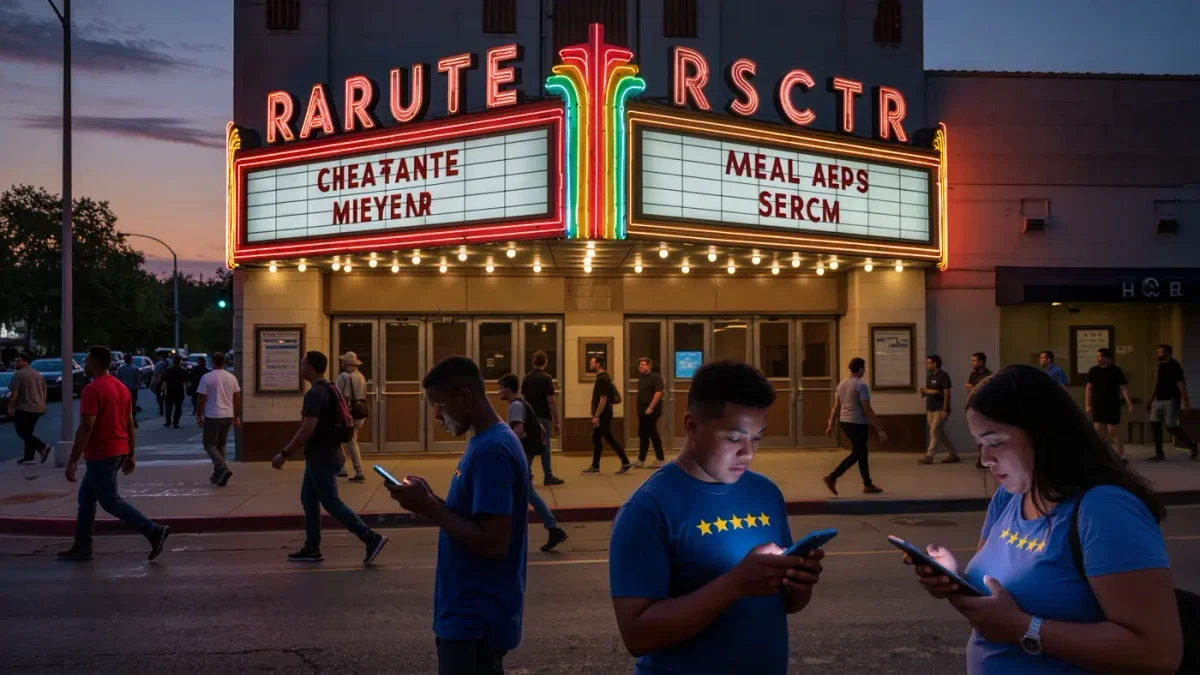
The vote arrived in stages, and the first stage looked harmless. Amazon opened customer reviews in 1995, letting readers rate books the professional press had already judged. Rotten Tomatoes aggregated reviews starting in 1998 and later added an audience score, creating a permanent public scoreboard next to the critics' one. Metacritic, founded in 2001, compressed critical consensus into a single number, which had the ironic effect of making individual critics less legible than the average they fed. Then Yelp, launched in 2004, applied the same logic to restaurants, and TripAdvisor did the same for nearly everything else.
By the 2010s the inversion was complete. Letterboxd turned film taste into a social activity where the amateur review is the product, not a response to it. Goodreads, acquired by Amazon in 2013, made the reader's rating the first number a publisher sees. The professional critic did not lose an argument; the critic lost the monopoly on the argument's venue. Once the audience score sat directly beside the critic score on the same screen, the critic's number became one data point among many, and often the less trusted one, because audiences assumed — sometimes correctly — that professionals were entangled with the industries they covered.
Did the experts actually get things wrong?
Honesty requires conceding that the professionals supplied their own ammunition. The critical establishment dismissed or ignored genre work that audiences loved — horror, science fiction, hip-hop in its early years — and was later forced to retroactively canonize much of it. The New York Times reviewed Bruce Springsteen's "Born to Run" in 1975 only after a colleague's famously negative review of an earlier show forced a corrective; the paper's initial recorded review of Led Zeppelin in 1969 dismissed the band outright. Whole art forms, from comic books to video games to country music, spent decades being treated as beneath serious coverage by outlets that claimed to define seriousness.
There were structural failures too. Criticism in the twentieth century was overwhelmingly white, male, and coastal, and it confidently generalized about "Americans" from a vantage point in Manhattan. When the internet diversified the pool of voices in the 2000s and 2010s, the new writers documented tastes and communities the old guard had never covered, and the contrast made the old guard's blind spots look less like standards and more like habit. The strongest defenders of critical authority concede this history; the question is whether the cure — infinite voices, no arbiter — has costs of its own.
Is there a case for the gatekeepers?
Yes, and it deserves a fair hearing. The strongest version goes like this: aggregated opinion measures popularity, not quality, and the two are different things. A Rotten Tomatoes audience score tells you what people enjoyed; it cannot tell you what will still be watched in thirty years. Historically, some of the most durable American works — "Moby-Dick," "It's a Wonderful Life," "The Wire" — were commercial or critical disappointments on release and were rescued by exactly the kind of patient, institutional judgment that the score economy cannot perform. Defenders argue that criticism is a skill like any other: context, comparison, and the ability to articulate why something works are trained capacities, not opinions with a press badge. When institutions lay off critics, they are not democratizing taste; they are outsourcing it to whoever optimizes best.
What replaced the critic's chair?
Three things, in roughly ascending order of influence. First, the algorithm: Netflix and Spotify do not publish reviews, they publish recommendations, and their suggestions are based on behavior rather than argument. Second, the creator-economy reviewer, from YouTube film channels to BookTok, where individuals build audiences on personality and consistency and often command more attention than legacy critics. Third, and most quietly, the friend graph — the recommendation of a person you actually know, mediated by a platform, which research on trust has consistently found more persuasive than institutional voices.
None of these is a critic in the twentieth-century sense. The algorithm cannot be argued with, the creator answers to an audience rather than a standard, and the friend graph is invisible to anyone outside it. The judgment did not disappear from American culture; it went private, personalized, and unauditable. That is the real shift: not from expertise to ignorance, but from public judgment to judgment that leaves no shared record.
Can cultural expertise come back?
Partially, and the signs are already visible. Substack and Patreon have made individual critics viable again outside institutions, and several prominent writers left legacy outlets in the 2020s to prove it. Nonprofit models are growing: the National Endowment for the Arts and foundations such as the Knight Foundation have funded local arts journalism as newspapers retreated, treating criticism as civic infrastructure rather than a profit center. YouTube criticism, at its best, is longer and more substantive than most newspaper reviews ever were.
But the new expertise is voluntary. Americans no longer inherit a critic; they choose one, and most choose none. The consequence is a culture that produces more commentary than any in history while producing less consensus about what matters — a world where every verdict is available and none is final. The expert did not lose a war for authority. The expert lost the assumption that authority was needed, and nothing so far has brought the assumption back.