The average American now spends over seven hours a day looking at screens, consuming somewhere near 100,000 words of text and text-equivalent content — a figure communication researchers have estimated since 2009, when the San Diego Supercomputer Center's "How Much Information?" project first measured it, and which has only grown since. Yet reading-comprehension scores tell the opposite story: NAEP results released in 2024 showed American students' reading at the lowest levels in decades. The country has never read more or understood less, and the gap between those two facts is the whole argument for slow reading.
What is slow reading?
Deliberate reading at less than maximum velocity — usually on paper, usually without a notification within reach, usually with a pen. The practice has a small institutional history: slow reading movements surfaced in the 2000s and 2010s on the model of slow food, and academics revived an older technique called "deep reading," associated with scholars like Maryanne Wolf, whose research at Tufts and UCLA argued that the reading brain develops differently on skimming platforms than on sustained, linear text. Slow reading is not a nostalgia pose. It is the recognition that comprehension is not a download speed.
The mechanics are unglamorous. Attention research going back decades shows that comprehension and memory degrade under interruption and that rapid skimming trades accuracy for coverage. A 2016 University of Oregon study of millions of students found that online reading was eroding comprehension specifically for informational texts — the hard kind. None of this is controversial among researchers; the controversy is only over whether anyone will act on it.
What did the feed do to reading?
It changed the unit. The book trains a specific circuit: hold a question for three hundred pages, follow an argument across chapters, tolerate delay. The feed trains the opposite: evaluate fast, discard, repeat. The skills are genuinely different, and the second one is winning by hours. Social platforms, engineered around variable rewards, reward the reader's restlessness with novelty every few seconds — a schedule no novel can match. By the mid-2010s, the phrase "I can't finish books anymore" had become such a common confession that it generated its own genre of essays, and the 2020s reading-accountability economy boomed: BookTube, BookTok, reading trackers, and speed-reading apps that promise more books per year — metrics of reading that measure everything except what reading does.
The honest complication: total reading is not collapsing. Audiobook revenue has grown for over a decade straight; ebook sales are stable; library apps report record circulation. What is changing is mode — from sustained to fragmentary — and mode is where comprehension lives.
Does speed reading actually work?
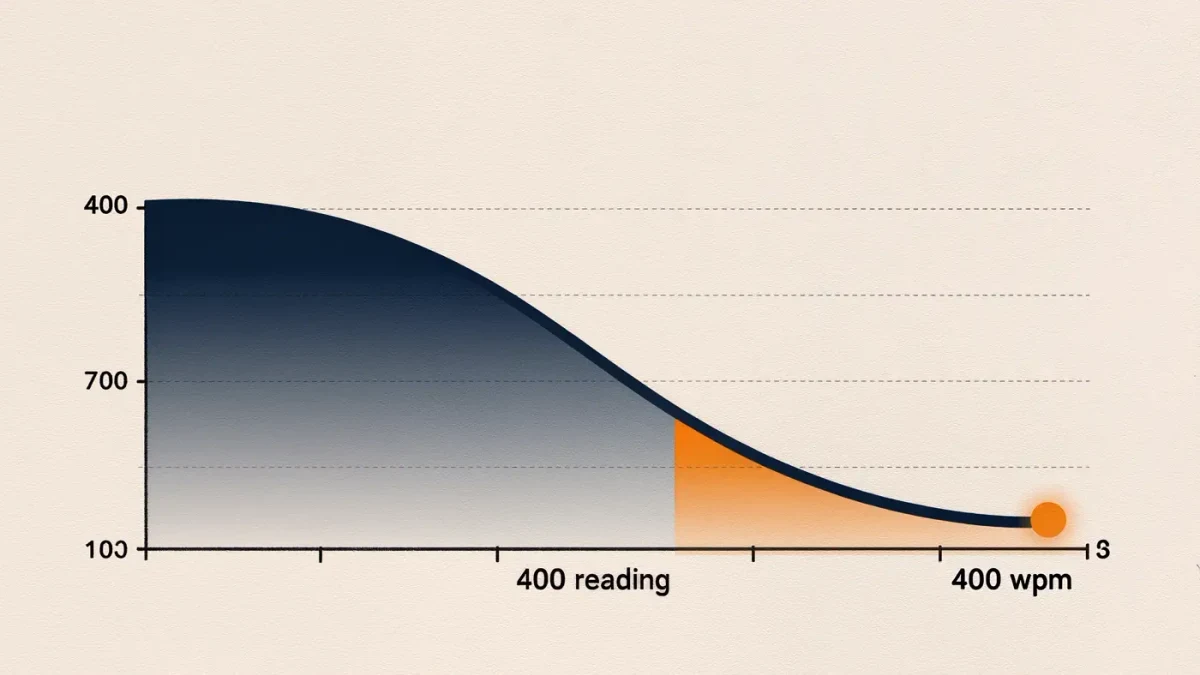
Here the science is bluntly on the slow readers' side. A comprehensive review published in Psychological Science in the Public Interest in 2016, synthesizing decades of work, concluded that claims of reading at thousands of words per minute with full comprehension are not supported: beyond roughly 400-500 words per minute, comprehension falls off a cliff, and the famous speed readers achieve their numbers by skimming — which is a real skill, but a skill of sacrifice, deciding in advance what not to understand. There is no technique that beats the trade-off, because the trade-off is the physics of language processing itself.
This matters because the culture keeps selling acceleration. Apps, courses, and AI summaries promise the contents of books without the reading, and the promise has a real flaw: summaries preserve claims but not circuits. The value of a difficult book is partly what it argues and largely what it does — the sustained construction of an argument you could not have summarized your way to. Outsourcing that to a machine is like outsourcing gym sessions by watching someone else lift.
Is the panic about screens overblown?
The skeptics deserve a fair paragraph, because they have points. Moral panic about reading is itself a genre with a long history — Socrates warned that writing would destroy memory, and every technology since has summoned its own elegy. Screen reading is real reading; comprehension depends on what and how, not the glass. Poor readers were poor before smartphones; the 2024 NAEP declines track pandemic learning loss, chronic absenteeism, and funding realities more than any single device. And the slow-reading ideal can shade into class performance — the leisure to read for hours is not universally distributed, and a person commuting two jobs is not morally deficient for preferring a podcast.
Grant all of it, and the core finding still stands: comprehension requires attention, attention requires protection, and the current information environment is engineered against both. The slow-reading argument does not require believing screens are evil. It requires only believing that a muscle needs resistance.
How do you actually read slowly?
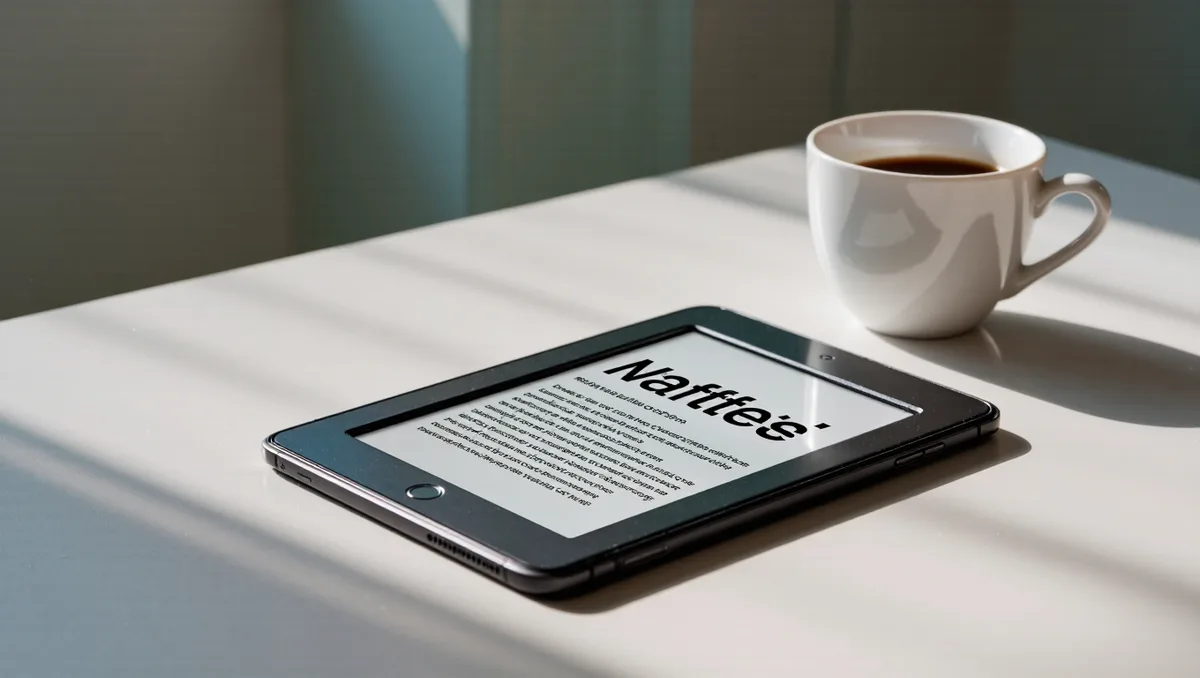
The practice is simple, which is why its rarity is embarrassing. Print, or a dedicated e-reader with no browser. A fixed session — twenty-five minutes, a timer, the phone in another room, which attention research consistently recommends over willpower. Marginalia: writing slows the eye to the speed of thought. One book at a time. Rereading, the most unfashionable act in the economy of newness and among the most effective — memory research since Ebbinghaus has shown that revisiting material at intervals beats covering new ground. And finishing: the resisted book, completed slowly, teaches more than ten abandoned quickly.
The deeper argument, though, is not technique but endowment. Deep reading is where Americans still practice following an idea further than a feed finds profitable — the cognitive habit democracy assumes and no platform supplies. The country will not read its way back to attention by finishing more books per year. It will do it by letting a few books finish something in the reader. That takes hours, a page, and a silence — the cheapest technology in the house, and the only one not trying to leave.