The Kennedy Center Honors 2025 class is one of the stranger, and stronger, lineups in the award's 48-year history: Sylvester Stallone, George Strait, KISS, Gloria Gaynor, and Michael Crawford, feted across two days of Washington ceremonies on December 6–7, 2025. The medal presentation itself happened in the Oval Office, where President Donald Trump handed the honorees their rainbow-ribboned medallions before the traditional Kennedy Center gala. It was the second consecutive year the honors unfolded with a presidential Medal-style stop added to the schedule.
Who Exactly Made the Kennedy Center Honors 2025 Class?
Five honorees, spanning five decades of American popular entertainment: film (Stallone), country music (Strait), hard rock (KISS), disco and R&B (Gaynor), and musical theater (Crawford). Each received the honor for lifetime contributions to American culture, and each represents a different answer to the question of what American mass entertainment has been since the 1970s.
It is hard to overstate how unusual this mix is. The Kennedy Center has historically leaned toward prestige consensus: symphony conductors, living-legends-of-stage, carefully vetted pop royalty. The 2025 class instead reads like a cable-channel surfing guide from 1985. Stallone is the rare honoree whose cultural footprint rests almost entirely on one character — Rocky Balboa, the Philadelphia boxer who has anchored nine films since 1976. George Strait, the Texas traditionalist, holds more than 60 number-one country singles, more than any artist in the format's history. KISS, the four-man New York band whose makeup and pyrotechnics redefined rock spectacle, became the first full hard-rock band so honored. Gloria Gaynor's "I Will Survive" remains one of the most licensed, covered, and culturally load-bearing songs of the disco era. And Michael Crawford, the British original Phantom of the Opera — the honors are not restricted to Americans — carried the biggest musical-theater phenomenon of the late 1980s on his voice for years.
Why Did the Medals Come From the Oval Office?
Because the schedule said so. On December 6, 2025, President Trump received the honorees in the Oval Office and personally presented the Kennedy Center Honors medallions, continuing a format introduced the previous year, before the December 7 gala performance and seated honors ceremony at the Kennedy Center itself.
The Kennedy Center's board was reconstituted under the current administration in early 2025, with the president installed as chairman, and the institution has since become a periodic flashpoint in arguments about arts patronage and politics. The 2025 honors did not escape that argument. But the cultural significance of the class survives the noise around it, and in several ways the noise is the point. Stallone, Strait, KISS, and Gaynor are artists whose work was rarely greeted by institutional applause in its prime. Disco was dismissed, hard rock was condescended to, country was treated as a regional product, and Rocky was nominated for ten Oscars while being remembered mostly as a punchline about sequels. The honors, at their best, function as the establishment's belated acknowledgment that the popular is not the enemy of the permanent.
What Does the Class Say About American Taste?
That it is broader, and more stubbornly populist, than prestige institutions usually admit. The 2025 honorees share a trait: all five built careers on direct, unembarrassed emotional connection with enormous audiences, largely without critical fashion on their side.
Consider the numbers. Strait's touring career set attendance records across four decades. KISS played farewell tours that outlasted most bands' entire lifespans and licensed their logo onto more products than perhaps any band in history. "I Will Survive" has been anthologized by the Library of Congress and sung at karaoke bars on every continent. The Phantom of the Opera ran on Broadway for 35 years, and Crawford's original 1988 performance remains the reference point. Rocky launched the most enduring sports-film franchise in American movies. None of this required a grant panel's approval. All of it required audiences, in numbers that most honored artists never approach.
How Did the Gala Itself Go?
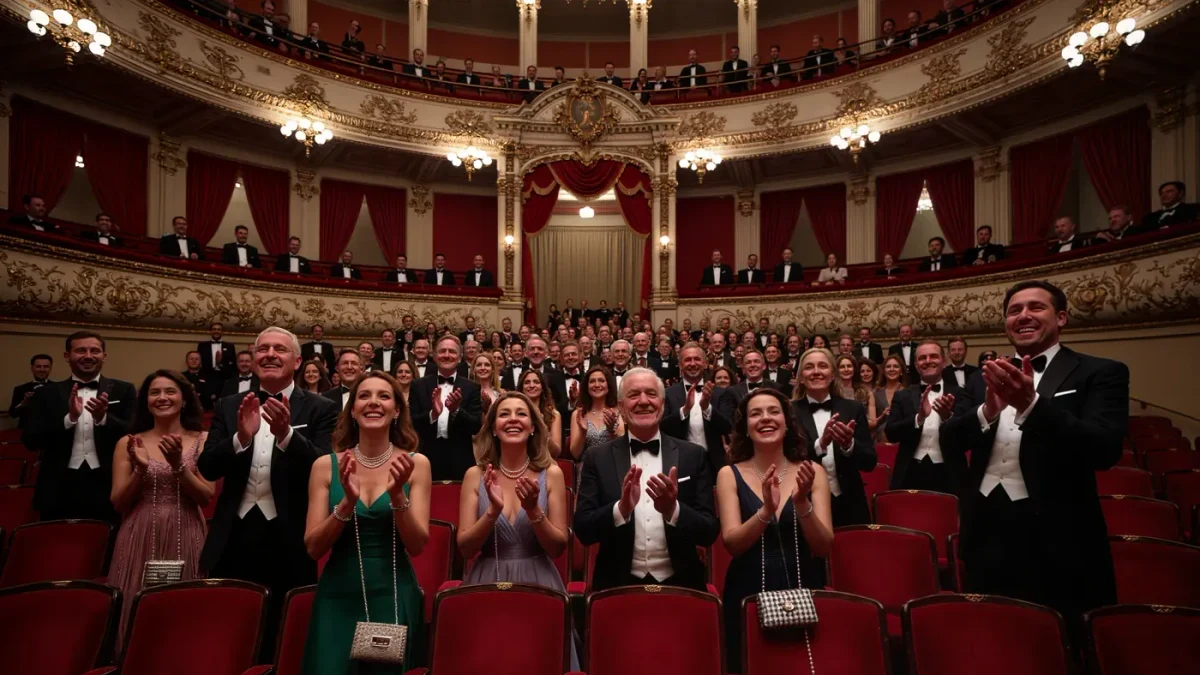
Per standard honors format, the December 7, 2025 ceremony kept honorees in the presidential box while peers performed tributes on stage — the long-standing conceit being that honorees watch their own celebration rather than perform it. The broadcast followed on CBS, as it has every year since 1978.
The gala also revived a tradition that matters more than the red carpet: the taped tribute segments, in which colleagues and admirers explain what the work meant. For KISS, that meant fellow rock acts grappling with the fact that spectacle, once considered a concession, is now simply the language of arena performance. For Gaynor, it meant gospel and R&B singers returning to a song that began as a B-side and became an international anthem of resilience. For Crawford, it meant theater people recalling a voice that set the commercial template for the modern megamusical. For Strait, it meant a parade of Nashville songwriters acknowledging the most reliable career in country history. For Stallone, it meant actors and directors weighing what a writer-actor who refused to sell his script's lead role did to Hollywood's idea of who gets to be a star.
Does the 2025 Class Change the Honors?
Possibly. Between KISS and Stallone, the 2025 class pushes the honors further toward mass-audience recognition than any in recent memory, and it will make the 2026 selection — already an annual parlor game — a real test of direction.
The honest read is that the honors have always tracked American culture with a lag of twenty to forty years. Soul, hip-hop, and film comedy all waited decades for their seats at the Kennedy Center. Hard rock's arrival, late as it is, completes a circle that began when the institution decided popular art belonged at all. The 2025 class will be remembered less for its politics than for its candor: this is what America actually watched, bought, and sang for two generations. The medals simply arrived after the audience already voted.