The National Endowment for the Humanities committed more than $116 million to humanities projects across its two 2026 grant announcements: $75.1 million for 84 projects, announced January 15, 2026, and $41.4 million for 81 projects, announced July 22, 2026. Per the agency's own announcements, both rounds leaned into the nation's 250th anniversary — funding research, education, and public programs on the Declaration of Independence and America's founding, alongside the Endowment's standing portfolio of preservation, museum exhibitions, historic sites, and collaborative scholarship.
What Did the January 2026 NEH Grants Fund?
The first 2026 round — $75.1 million across 84 projects, announced January 15, 2026 — was explicitly built around the semiquincentennial, with awards supporting research, education, and public programs on the Declaration of Independence and the founding era.
An anniversary this size only comes once, and federal cultural agencies treat it as a capital event: a moment when public attention briefly focuses on questions — what the founding meant, who it included, how the document's promises were argued over — that humanities scholars work on all the time. The January round's orientation toward founding-era programming is the NEH's contribution to a nationwide effort that spans the Smithsonian, the Library of Congress, and thousands of local historical societies. For the grantees, the money funds concrete products: documentary editions of founding-era papers, teacher institutes, exhibitions, and public programs timed to July 4, 2026 and the months around it. The cultural stakes are straightforward — anniversaries decide which narratives a nation rehearses, and the NEH's January round is a federal bet on the scholarly, multi-vocal version rather than the celebratory one alone.
What Came in the July 2026 Round?
The second announcement — $41.4 million for 81 projects, per NEH on July 22, 2026 — spread across the agency's standing categories: preservation of foundational documents, museum exhibitions and historic sites, humanities initiatives, and collaborative research.
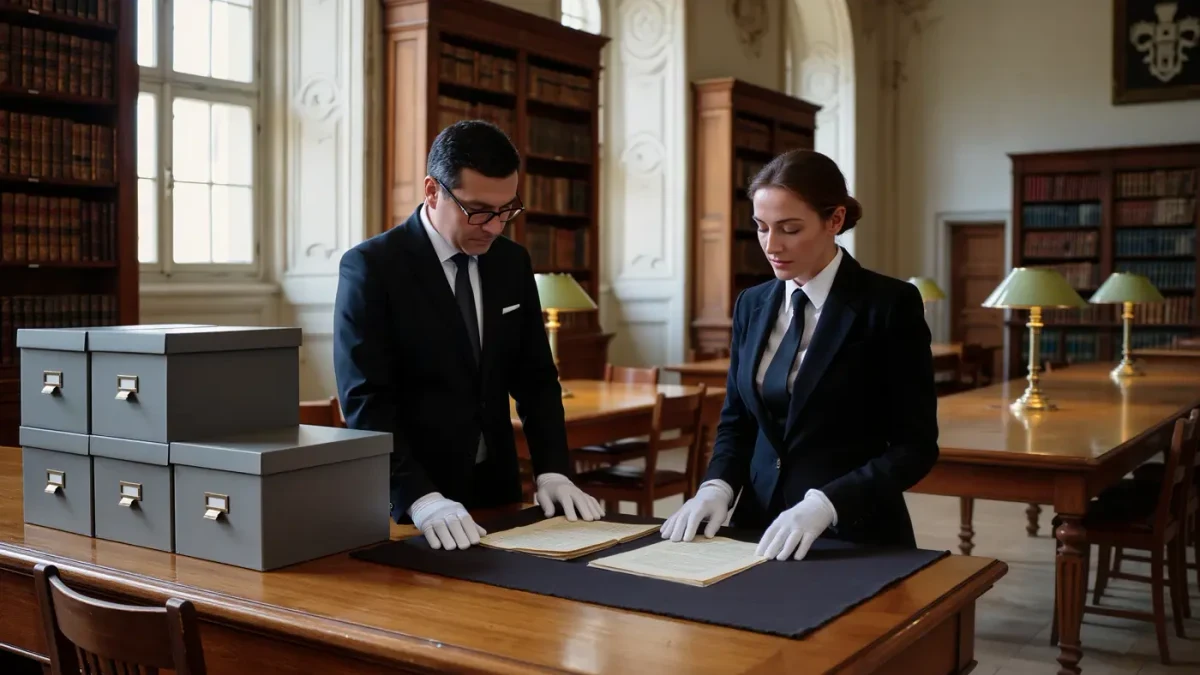
This is the everyday machinery of federal humanities funding, and it is worth knowing what the categories actually mean, because the money moves culture in slow, physical ways. Preservation grants keep archival collections from literally decaying — climate control, rehousing, digitization of paper and film that would otherwise be lost inside a generation. Museum and historic-site awards fund the exhibitions and interpretive programs that most Americans encounter as "history" in the wild. Humanities initiatives support discussion programs, documentaries, and library projects in communities that universities rarely reach. Collaborative research grants underwrite the multi-year scholarly projects — reference works, archaeological fieldwork, editions — that no single scholar or university could finance alone. None of it is glamorous; nearly all of it is load-bearing.
How Does the NEH Decide What Gets Funded?
Through peer review. Grant applications go to panels of outside scholars and practitioners who score them, and the National Council on the Humanities — the agency's presidentially appointed advisory body — reviews the recommendations before the Chairman makes final awards. The process is designed to keep congressional politics out of individual decisions, with mixed and argued-about success across the agency's six-decade history.
The Endowment's legal mandate is refreshingly blunt: it funds scholarship and public programming in history, philosophy, literature, languages, jurisprudence, archaeology, and related fields — the disciplines that study the human record. Its budget has always been small relative to the appetite; the two 2026 rounds together will fund 165 projects out of an applicant pool several times that size, which is why the humanities world treats each announcement as a census of what the field is currently prioritizing. The 2026 answer is legible in the awards themselves: founding-era scholarship, collection preservation, and public-facing programming — the three things a culture needs to remember anything at all.
Why Should Culture Watchers Care About a Grants List?
Because the list is a leading indicator. What the NEH funds this year becomes the exhibition, the documentary, the edited archive, and the college course of the next three to five years. The 2026 rounds, read together, forecast a stretch of founding-heavy, preservation-minded public humanities through the semiquincentennial period and beyond.
The pattern also tells smaller institutions where to aim. NEH funding disproportionately enables museums, historical societies, tribal preservation programs, and small colleges — institutions that lack development offices but hold the local record — to do work at a professional standard otherwise out of reach. When the July 2026 round names grantees in every region, it is effectively publishing a map of where American humanities capacity actually lives: not only in the famous archives and flagships, but in county museums and university presses doing slow, unglamorous, permanent work. That is the quiet argument inside every NEH announcement, and the 2026 ones — $116.5 million, 165 projects, one 250th anniversary — make it at full volume.
For anyone tracking where American public culture is heading, the reading habit is simple: watch the January and July announcements each year the way investors watch filings. The 2026 documents — one anniversary-minded, one infrastructural — together describe a federal humanities agency spending its moment on memory: preserving the record, training the explainers, and putting the founding arguments back in front of a public that will spend a summer rehearsing them.